
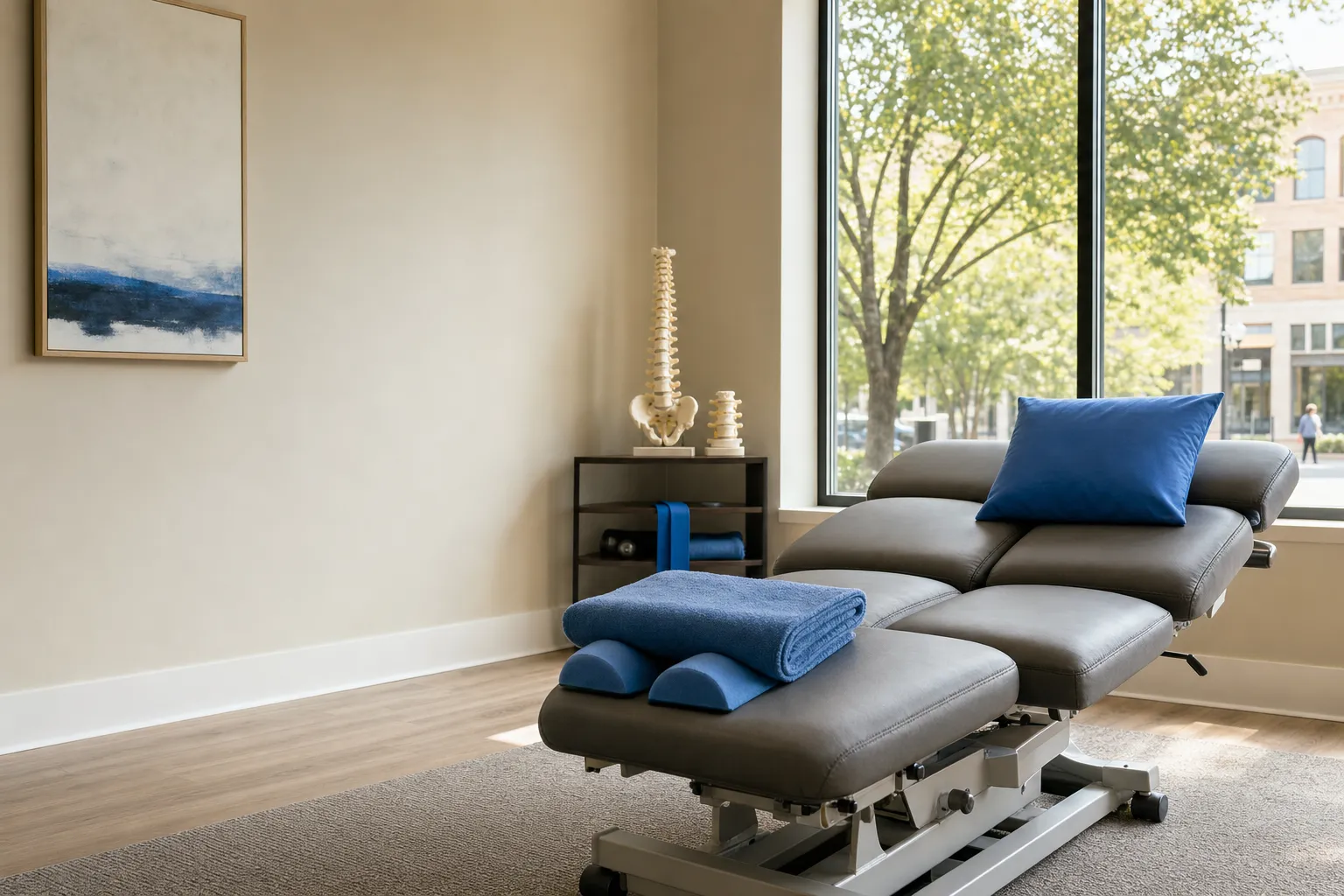
We begin sports rehab with a focused review and a hands on exam, then lay out specific next steps that move you from symptom relief to restored performance. That early decision making tells you whether we treat here, add movement coaching, or recommend a referral for imaging or specialist care.
What we mean by sports rehab and why the review matters
Sports rehab is targeted care for athletes and active people who need recovery, performance gains, or safe return to play. At Freedom Chiropractic and Wellness we use sports rehab to address the whole athlete, not just the painful joint. The initial review gives us the information we need to match treatment type, intensity, and timing to your goals and timeline.
Who we treat
We work with weekend warriors, high school and club athletes, adult recreational athletes, and active families from Lake Geneva and nearby communities. Our approach is practical, measurable, and focused on getting you back to what you do without recurring setbacks.
How we start sports rehab: the components of our review
The initial review is the foundation of any safe, effective plan. We combine history, hands on testing, movement screening, and goal setting so each next step is clear.
- Medical and injury history. We ask about the mechanism of injury, previous treatments, relevant diagnoses such as concussions or ligament tears, current medications, and any medical conditions that change care decisions.
- Current symptoms and goals. We document what hurts, when it hurts, and what activities you need to return to. Short term and long term goals shape the plan.
- Movement and joint testing. We test range of motion, strength, stability, balance, and sport specific mechanics to find the movement patterns that contribute to pain or weakness.
- Spinal and extremity exam. Using multiple spinal adjusting techniques and custom extremity assessments, we identify joint restrictions, mobility deficits, and nerves that may be involved.
- Functional performance checks. For athletes we add sprint, squat, jump, or overhead screens as relevant to your sport and position.
- Red flag screening and imaging decisions. If the review suggests fracture, neurological compromise, or internal injury, we recommend timely imaging or specialist referral.
Watch out: If your review shows progressive numbness, loss of coordination, sudden severe pain after a high force event, or signs of systemic illness, further evaluation with imaging and medical providers is necessary before routine hands on care.
How we decide the next steps after the review
Every recommendation follows from the review and aligns with your goals. Typical next steps fall into three categories.
- Conservative in clinic care, which includes spinal and extremity adjustments, soft tissue work, and movement coaching.
- Combined care that adds therapeutic exercise, mobility drills, and nutritional or lifestyle advice to support recovery.
- Referral or co care with imaging, orthopedic, or sports medicine specialists when the findings require it.
What influences our choice
We weigh injury severity, sport demands, timeline for return, prior response to care, and any medical risks. For example, a sprinter with an acute hamstring strain may need a different mix of hands on care and progressive loading than a weekend basketball player with recurring ankle instability.
Typical treatment elements you may see
We combine manual care with movement training and lifestyle guidance. The exact mix depends on the review findings.
- Spinal adjustments to improve joint motion and reduce protective muscle guarding. We use multiple adjusting techniques based on what fits each patient.
- Custom extremity adjustments for shoulders, elbows, hips, knees, and ankles to restore joint mechanics important to sport skills.
- Targeted soft tissue work and myofascial release to reduce tightness and improve range.
- Movement coaching that focuses on sport specific mechanics, core control, and joint loading patterns.
- Corrective exercise progressions and home programs to develop durable strength and mobility.
- Nutritional and lifestyle advice that supports recovery and reduces inflammation.
Step by step example care path for a common sports injury
Here is a typical path we follow for a non surgical hamstring strain. It shows how the review leads to staged next steps and objective measures.
- Stage 1: Initial assessment and pain control. Reduce symptom provoking activity, gentle mobility, light hands on care, and targeted soft tissue work until acute pain decreases.
- Stage 2: Restore range and control. Progress to active mobility drills, controlled eccentric loading, and adjustments to restore hip and low back mechanics.
- Stage 3: Strength and capacity building. Move to higher load eccentric and concentric strengthening, agility drills, and running progressions as tolerated.
- Stage 4: Sport specific return to play. Incorporate sprinting, cutting, and position drills with monitoring. Objective measures guide the final clearance to full participation.
Pro tip: Bring a video or notes about the movement that causes symptoms, and tell us your sport demands. That context helps us tailor the movement tests and make faster progress.
How we measure progress and decide readiness to return
We set measurable goals in the review so you and we know when to advance phases. Objective tests reduce guesswork.
- Range of motion targets measured in clinic.
- Strength benchmarks for key muscle groups, for example single leg bridge time or eccentric hamstring strength comparisons.
- Functional tasks such as a single leg hop test, sport specific sprint times, or coach reported performance drills.
- Pain and function scores tracked over time.
Return to play is staged
Return to full competition is the last stage. We recommend gradual exposure based on the athlete’s tolerance and objective measures rather than a fixed timeline.
When we refer out or work with other providers
Our review may show the need for imaging, an orthopedic opinion, or collaboration with a physical therapist or athletic trainer. We support coordinated care when it benefits recovery and safety.
We do not use referrals to avoid care. They are chosen when specialist input, advanced imaging, or surgical discussion will improve outcome.
What we ask you to do between visits
Rehab is a team effort. Home programs and activity modifications are essential for durable results.
Home program checklist
- Follow prescribed mobility and strengthening drills daily.
- Log symptom changes and activity levels so we can adjust progressions.
- Avoid repeated high risk movements until you have regained control.
- Apply recovery habits we recommend, such as proper sleep and hydration.
How our Lake Geneva location and our team fit into sports rehab
Freedom Chiropractic and Wellness provides sports focused chiropractic care in Lake Geneva, Wisconsin, led by Dr. Dan VanderWeit, a licensed chiropractor. We emphasize clear goals and measurable progress, and we blend hands on adjustment skills with movement coaching and nutrition advice to support athletes at every level.
To learn more about the broader approach that guides our plans, read our topic overview on Sports Rehab. For details about our sports chiropractor services see our Sports Chiropractor page. Visit our Lake Geneva location page to learn where we serve the community Freedom Chiropractic and Wellness in Lake Geneva.
Common questions we answer during the review
We routinely address questions about imaging, safety, and how long rehab takes. Clear answers are part of the initial review so expectations are aligned from the start.
Will I need an X ray or MRI?
If the review finds signs that imaging will affect treatment decisions, we will recommend it. For routine muscle strains and mild joint injuries we often manage conservatively without immediate imaging.
Is chiropractic adjustment safe for athletes?
Chiropractic adjustment is commonly used in sports care and is performed here by a licensed practitioner who tailors technique to the athlete and the injury. We adapt our approach when other medical concerns exist.
How many visits will I need?
The review gives a realistic plan range, and we update it as you respond. Some athletes respond in a few visits, while others follow a multi week plan focused on return to play.
Evidence and standards we reference
For background on the chiropractic profession see the overview on Wikipedia’s chiropractic entry. For Wisconsin licensure and scope of practice we consult the Wisconsin Department of Safety and Professional Services licensing guidance. When we use instrument assisted techniques we follow the manufacturer guidance and maintenance recommendations for the devices we use.
Frequently asked questions
What happens at my first sports rehab visit?
We take a focused history, perform a hands on exam and movement screen, set measurable short term and long term goals, and recommend the next steps which may include hands on care, exercises, or referral for imaging.
Will I be cleared to play after one visit?
Clearing to play depends on objective measures and sport demands. Most athletes progress through stages and are cleared only when strength, control, and symptom thresholds are met.
Do you coordinate with coaches or trainers?
Yes. With your permission we communicate with coaches and athletic trainers to align on return to play timelines and to implement sport specific progressions.
How do you handle concussions or suspected head injury?
Concussion signs are treated as a medical priority. If the review suggests concussion we refer for urgent medical evaluation and follow recommended graduated return to play protocols in collaboration with medical providers.
Key takeaway
A thorough initial review lets us match treatment to your sport and goals, so the plan moves from safe symptom control to measurable return to play. At Freedom Chiropractic and Wellness in Lake Geneva we combine hands on adjustments, movement coaching, and progressive rehab to help athletes recover and perform.
Where to learn more and see our local reviews
Read patient experiences and get directions on our Google Business Profile, and learn more about related topics and services on our site.