
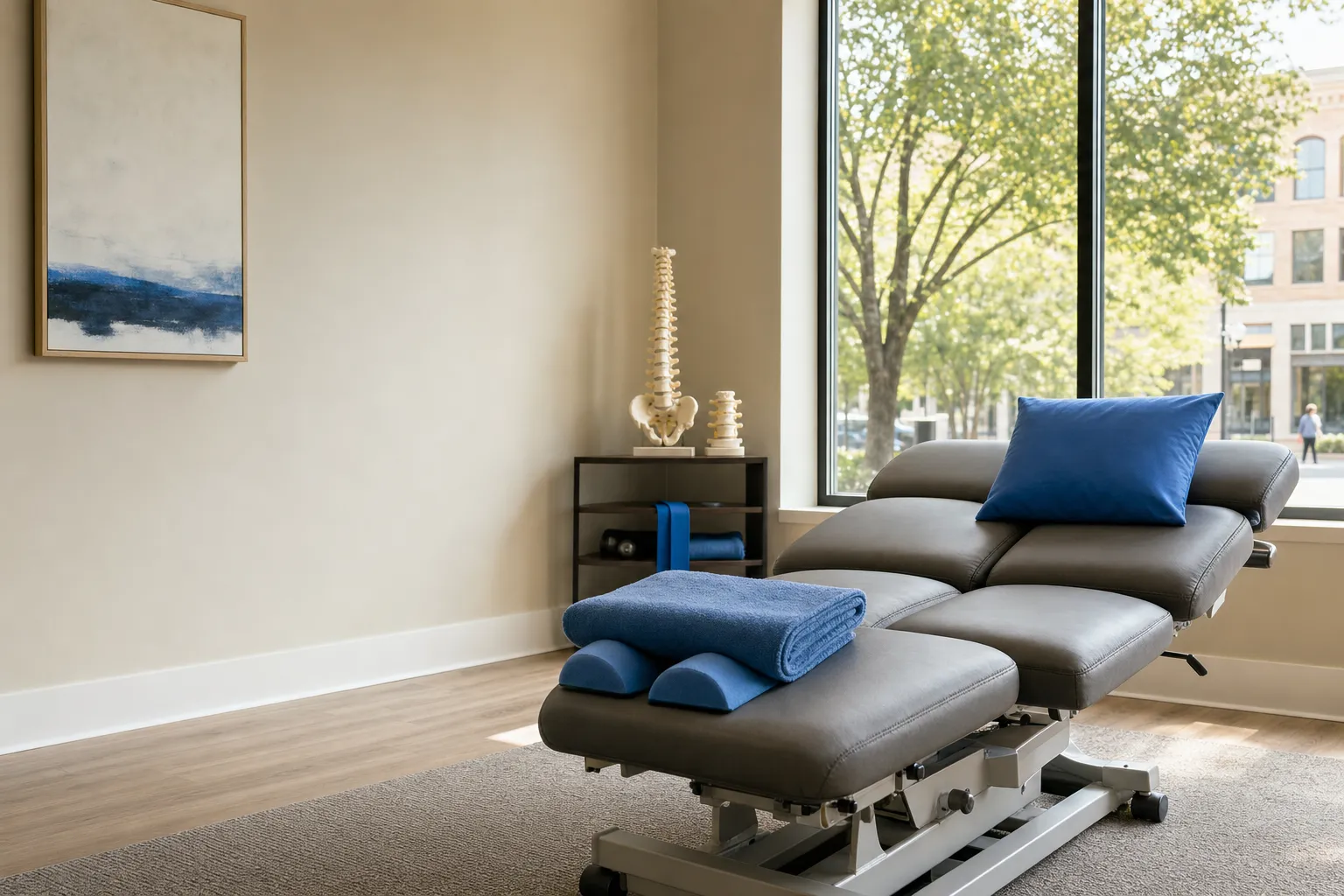
Sports rehab supports sports chiropractic by identifying movement limitations, guiding progressive loading, and coordinating a safe return to play. At Freedom Chiropractic and Wellness we combine spinal and extremity adjustments with targeted rehab so athletes and active people recover function and lower their chance of reinjury.
What is sports rehab and why it matters for sports chiropractic
Sports rehabilitation is a movement based, progressive program designed to restore strength, mobility, balance, and sport specific skills after injury or surgery. It is not an optional add on, it is the bridge between a chiropractic adjustment and full, reliable function on the field, court, or trail.
Core goals of sports rehab
- Restore joint range of motion and soft tissue mobility
- Rebuild strength in movement patterns used in sport
- Correct movement compensations that increase reinjury risk
- Progress exposure back to sport specific loads and speeds
- Coordinate return to play criteria with measurable goals
How sports rehab changes the care a sports chiropractor provides
When we integrate sports rehab into chiropractic care the focus shifts from symptom relief to functional restoration and performance. That changes assessment, treatment sequencing, and the metrics we use to decide if someone is ready to return to sport.
Assessment becomes movement based
Besides spinal and joint exams, we test lifted and dynamic movements, single leg control, sprint mechanics, and sport specific patterns. Those tests tell us which adjustments, soft tissue approaches, and exercises will deliver the most meaningful change.
Treatment sequencing is collaborative
Instead of only delivering adjustments, we layer care. Early on we prioritize pain control and safe mobility, then add progressive loading, neuromuscular reeducation, and finally sport drills. That sequencing lowers reinjury risk and shortens time lost from sport compared with ad hoc care.
What a typical sports rehab progression looks like
- Comprehensive review and baseline testing. We document pain, range of motion, strength, movement quality, and sport demands. This baseline guides measurable goals.
- Pain management and early mobility. Hands on adjustments, gentle movement drills, and targeted stretching reduce guarding and restore usable range.
- Strength and control training. We use progressive resistance and single leg or asymmetry drills to rebuild control in sport relevant patterns.
- Power and speed development. Once control is reliable we add plyometrics, acceleration drills, and sport specific movements.
- Return to play testing and transition. We use objective criteria, practice simulations, and graded exposure to make sure you meet performance and safety benchmarks.
Pro tip: Objective tests, not how you feel day to day, are the best guide for progression. We track numbers so you and we can see real improvement.
Assessment and measurement we use
Our assessments combine standard chiropractic exams with performance tests commonly used in sports medicine. Examples include single leg balance tasks, hop tests, isometric strength measures, and movement screens tailored to the athlete s sport.
What we measure and why
- Range of motion, because restricted joints change movement patterns
- Muscle activation and asymmetry, because side to side differences predict reinjury
- Strength in functional positions, because open chain and closed chain demands differ
- Sport specific drills, because the final test is how you perform on the field
When sports rehab is essential
Sports rehab is central whenever pain affects movement quality, when an athlete needs to return to sport safely after an injury, and when persistent weakness or compensation remains after an adjustment. It is also appropriate for weekend warriors who want to correct recurrent strains and build resilience.
Signs that rehab is needed
- Recurring sprains or strains with minimal provocation
- Loss of speed, power, or endurance compared with baseline
- Lingering stiffness or instability after a course of adjustments
- Compensations such as favoring one side during sport tasks
What sports rehab does not do
Sports rehab does not skip professional assessment or replace skilled adjustment when a joint restriction, nerve irritation, or structural issue needs hands on care. It complements those therapies and depends on a professional to set safe progression and modify loading when needed.
Watch out: Attempting high intensity return to play drills without a professional review increases reinjury risk. A trained clinician should clear progressions when pain or impaired movement persists.
Examples from our practice in Lake Geneva
We work with weekend runners who need gait retraining after ankle sprains, high school athletes rehabbing hamstring strains, and adult league players returning from shoulder injuries. Led by Dr. Dan VanderWeit, a licensed chiropractor, we use multiple spinal adjusting techniques and custom extremity adjustments within care plans that include exercise prescription and nutritional guidance.
For instance, a soccer player with chronic hip stiffness receives a mobility first program, then progressive single leg strength and sprint drills, and finally match simulation before full return. That staged approach prevents setbacks and restores confidence.
Checklist before you return to sport
Return to play readiness checklist
- Pain is low and does not increase during graded sport tasks
- Range of motion is within functional limits for sport demands
- Strength is at least 90 percent of the uninjured side for key movements
- Movement quality is consistent at sport speed and fatigue
- Sport specific drills have been tolerated in practice like settings
Common misconceptions about sports rehab and chiropractic care
We hear several recurring misunderstandings from patients. Here are the corrections we share during reviews.
Misconception 1: Adjustments alone fix everything
Adjustments reduce pain and restore joint motion, but without targeted rehab the body often reverts to old patterns. Rehab retrains the brain and muscles to sustain the gains from an adjustment.
Misconception 2: Rehab is only for elite athletes
Rehab is for anyone who needs to recover reliable movement. Weekend athletes, active families, and people managing chronic pain all benefit from progressive, measurable programs.
How we coordinate care at Freedom Chiropractic and Wellness
We document goals, measure progress, and adjust plans based on objective data. That means clear treatment goals rather than quick fixes, and a mix of hands on adjustment skills with movement coaching and nutritional advice to support recovery.
When a case requires other expertise we coordinate with local providers so care stays focused on the patient s functional goals.
Related resources we recommend
- What we cover in sports rehab for more detail on exercise progressions and criteria
- Sports Chiropractor services to see how adjustments and extremity work fit into plans
- Care in Lake Geneva, Wisconsin for location specific details and service area
- Return to Play guidance we use when progressing athletes
Evidence and professional guidance
Chiropractic care and exercise based rehabilitation are commonly used together in sports medicine. The American Chiropractic Association provides practice resources for sports care, and government health agencies describe safety considerations for manual therapies. For workforce context, the U.S. Bureau of Labor Statistics tracks employment and outlook for chiropractors, which helps explain how practitioners are trained and regulated.
References: American Chiropractic Association practice resources, the National Center for Complementary and Integrative Health guidance on chiropractic, and the U.S. Bureau of Labor Statistics chiropractor occupational profile.
Key takeaway
Sports rehab turns a successful adjustment into reliable, sport ready movement. By combining targeted rehab with skilled chiropractic adjustment we aim to restore function, reduce reinjury risk, and return athletes to the activities they value.
Frequently asked questions
How long does sports rehab usually take?
Length of rehab depends on the injury severity, prior fitness, and sport demands. Minor strains can improve in a few weeks with focused work, while more significant injuries or surgeries often need several months of staged progression. We set measurable milestones so you can see progress week to week.
Will I still need chiropractic adjustments during rehab?
Often yes. Adjustments help restore joint function and reduce pain so you can perform rehabilitation exercises with better quality. We coordinate the timing of adjustments and rehab sessions to support safe progression.
Can sports rehab prevent future injuries?
Yes, when done correctly. Rehab corrects movement deficits, builds resilience, and improves neuromuscular control, all of which lower reinjury risk. That said, no program removes risk entirely, and ongoing maintenance work is usually recommended for high demand athletes.
Do you work with youth athletes?
Yes. We tailor progression and load based on age, growth, and sport demands. Youth programs emphasize movement quality, balanced strength, and gradual exposure to sport specific activities.
What does return to play testing include?
Return to play testing combines objective strength and hop or sprint measures, movement quality at speed, and sport specific simulations. We require consistent performance across these tests before recommending full return to competitions or high risk exposures.
Is sports rehab safe if I am still in pain?
Rehab can be safe if the program is modified for your pain level and guided by a licensed clinician. We prioritize pain control and graded exposure, and we stop or regress exercises that increase pain or compromise movement quality.
Learn more and read reviews
Check our Google Business Profile for directions and recent patient reviews, and read related pages about our sports rehab approach and sports chiropractor services on this site.
Home | Sports Chiropractor | Sports Rehab | Lake Geneva location