
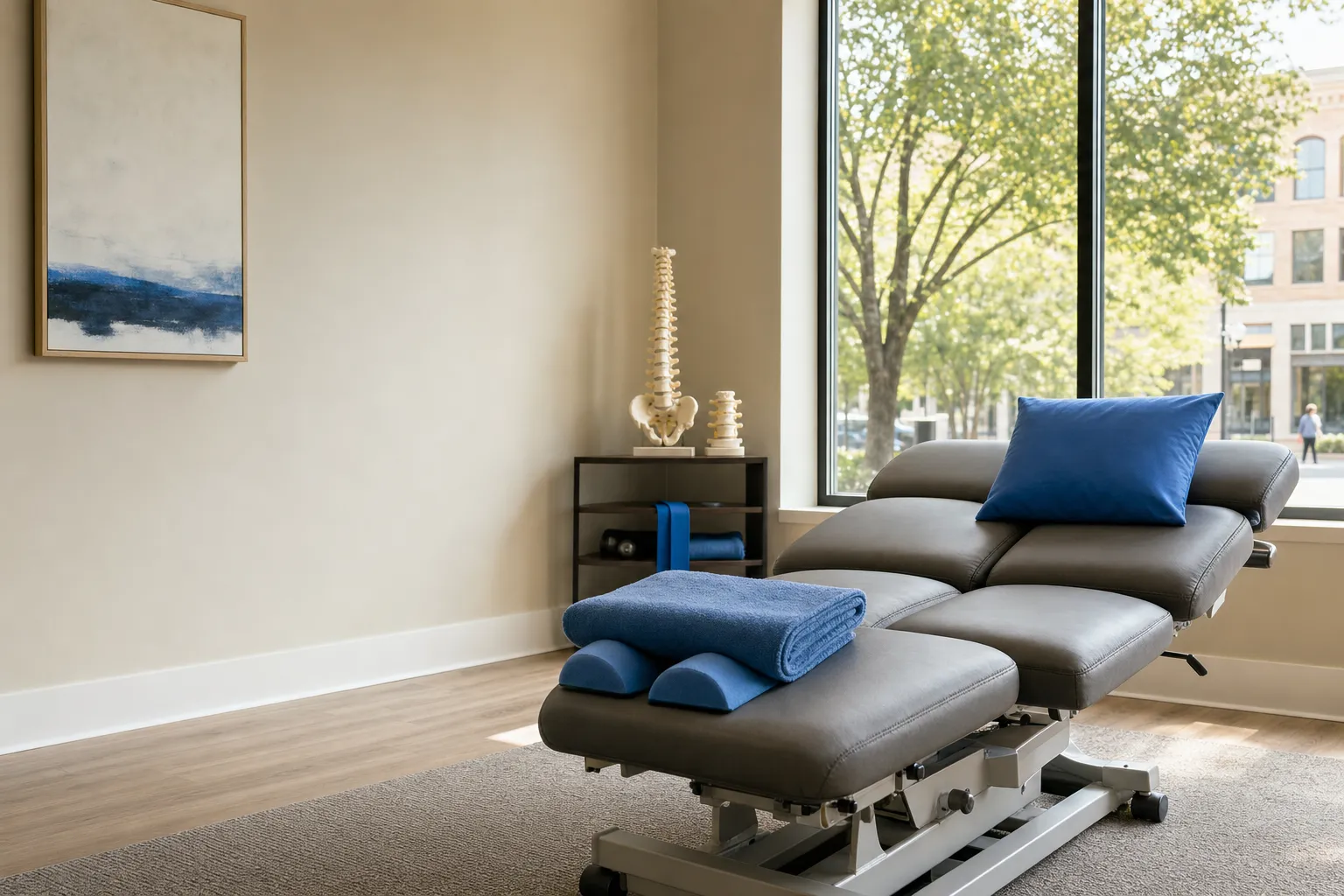
Athlete mobility matters during chiropractic care because it defines how an athlete moves, where stress concentrates, and what treatment will restore safe, efficient motion. Improving mobility is not optional for athletes who want consistent performance or a safe return from injury, and we build mobility into every sports focused treatment plan.
What athlete mobility means for chiropractic care
What is athlete mobility?
Mobility is the usable, pain free range of motion at a joint combined with the control to move through that range under load and at speed. For athletes, mobility includes joint range, soft tissue length, neuromuscular control, and the ability to tolerate sport specific forces. Mobility is different from simple flexibility, because it implies organized movement and strength through the range.
How mobility fits into chiropractic treatment
When we adjust someone, we are changing joint mechanics to reduce pain and improve movement. For an athlete, that change is only useful if the surrounding tissues and movement patterns let the new joint mechanics work under sport demands. That is why adjustments are paired with targeted mobility work, movement coaching, and progressive loading rather than standing alone.
Why mobility matters locally in Lake Geneva and nearby communities
Lake Geneva is home to weekend runners, recreational cyclists, and organized youth sports. Those activities place repeat loads on the spine, hips, and shoulders. Limited mobility increases the risk that one area will take too much force, leading to pain or injury. We treat athletes from Lake Geneva and surrounding communities by assessing how local training patterns and common activities relate to movement limitations.
At Freedom Chiropractic and Wellness, led by Dr. Dan VanderWeit, a licensed chiropractor, we focus on measurable progress and practical plans so athletes can get back to the activities they enjoy. We are licensed and insured, and we work with weekend warriors, competitive athletes, and families across the region to reduce downtime after injury and improve long term function.
Key concepts every athlete should know
- Range of motion. The degrees a joint can move actively and passively, such as hip flexion or shoulder rotation.
- Movement control. The nervous system's ability to guide joint movement under load, speed, and fatigue.
- Stability versus mobility. Some areas need stability, some need mobility. Good programs balance both.
- Tissue quality. Tight or tender muscles change movement patterns and load distribution.
- Load tolerance. Mobility is useful only if tissues can tolerate the forces of sport.
- Progressive return to play. Mobility improvements must be integrated into sport specific drills before full return.
Common mobility related problems we see in athletes
Limited ankle dorsiflexion that alters squat mechanics and increases low back load, tight hips that reduce stride length and transfer stress to the lumbar spine, stiff thoracic spines that create compensatory shoulder or neck tension. These patterns are common after short term overuse, a single injury, or simply years of repetitive sport specific movement.
Pro tip: Mobility issues often look like strength deficits. An athlete who cannot access a range will appear weak in that range. Evaluating movement quality, not just muscle strength, helps identify the true limitation.
How we evaluate athlete mobility
Our evaluations combine a movement screening, joint specific testing, and a discussion of training history and goals. We look for compensations, symmetry differences, and painful ranges. Results are measurable so we can track progress over weeks and months rather than guessing.
What an initial assessment includes
- Functional movement screening to assess dynamic patterns.
- Joint specific range and loading checks for spine, shoulders, hips, knees, and ankles.
- Palpation of soft tissues to identify tightness or trigger points.
- A review of training load, recent changes, and injury history.
How we integrate mobility into treatment plans
We combine spinal and extremity adjustments with guided mobility work, corrective movement coaching, and progressive strengthening. Treatment plans are practical and measurable, and they focus on returning the athlete to their sport demands while preventing recurrence.
Typical components of a mobility focused plan
- Targeted spinal adjustments to restore joint mechanics.
- Custom extremity adjustments for shoulders, hips, or ankles when needed.
- Movement coaching to retrain patterns that caused the problem.
- Corrective exercises that progress from unloaded mobility to loaded stability.
- Guidance on nutrition and recovery habits to support tissue healing.
We avoid long protocols that promise quick fixes. Our plans emphasize steady, measurable improvement, and they change as the athlete adapts.
Comparison, so you know what to expect
| Approach | Primary purpose | How it works with chiropractic care |
|---|---|---|
| Mobility training | Improve usable range and movement control | Prepares joints and tissues to maintain gains from adjustments |
| Flexibility work | Increase soft tissue length | Useful as part of mobility, but needs movement control to be safe |
| Strength training | Raise load tolerance and stability | Needed after mobility improves to protect joints during sport |
Signs an athlete needs mobility focused care
When to consider a mobility assessment
- Recurring pain during a specific movement, such as squatting or throwing
- Reduced performance, like slower sprint times or shorter jump height
- Asymmetry between left and right sides
- Difficulty returning to play after an injury
- Chronic tightness that does not respond to usual warm ups
Related services we provide
Mobility work is part of our broader sports care. Related services include our sports chiropractor services, spinal adjustments, and targeted chiropractic adjustments. We also coordinate with strength coaches and physical therapists when an athlete needs a multidisciplinary approach.
Related locations and who we serve
We treat athletes across Lake Geneva and nearby towns. For details about our service area and locations, see our locations page at the clinic locations hub. We work with youth athletes, collegiate players, weekend competitors, and active adults to reduce time lost to injury and improve long term movement quality.
Find the clinic locations hub here: Locations hub.
Helpful resources and further reading
For background on chiropractic and sports care, the American Chiropractic Association publishes patient focused information on sports injuries and chiropractic approaches. The University of Wisconsin Health system offers an accessible overview of chiropractic care and what to expect. For industry data about chiropractic practice and workforce, the U.S. Bureau of Labor Statistics maintains a detailed profile for the profession.
When we reference external guidance for patients, we prefer these authoritative sources:
Key takeaway
Mobility matters because it determines how an athlete moves and whether improvements from an adjustment will hold up under sport demands. By measuring movement, addressing joint mechanics, and integrating mobility with progressive training, we help athletes in Lake Geneva return to safe, reliable performance.
Frequently asked questions
Will chiropractic adjustments improve my mobility?
Adjustments can restore joint mechanics and reduce pain that limits motion. We combine adjustments with targeted mobility and movement coaching so the improvement transfers to sport. Adjustments alone are rarely enough for sustained change.
How soon will I see mobility improvements?
Some people notice immediate gains in range after an adjustment, but lasting mobility requires follow up work. Most athletes show measurable progress in two to six weeks when adjustments, corrective exercises, and training load are applied consistently.
Is mobility training safe for young athletes?
Yes, when it is age appropriate and overseen by a licensed professional. We tailor assessments and plans for youth athletes, focusing on movement quality and gradual progression rather than aggressive stretching or heavy loading.
Do I need to stop training while working on mobility?
Not usually. We help athletes modify training to prevent overload while they improve mobility. The goal is to maintain fitness with adjustments that reduce harmful stress and progress back to full sport activities.
How does mobility work differ from physical therapy?
Both aim to improve movement and reduce pain. We emphasize hands on adjustments, extremity adjustments, and movement coaching alongside exercise. When cases need specific rehabilitation protocols, we coordinate with physical therapists to provide complementary care.
Learn more and check our online profile
Read verified patient reviews and find directions on our Google Business Profile, and learn more about athlete mobility and related topics on our site. For details about our sports focused services, see our sports chiropractor page.