
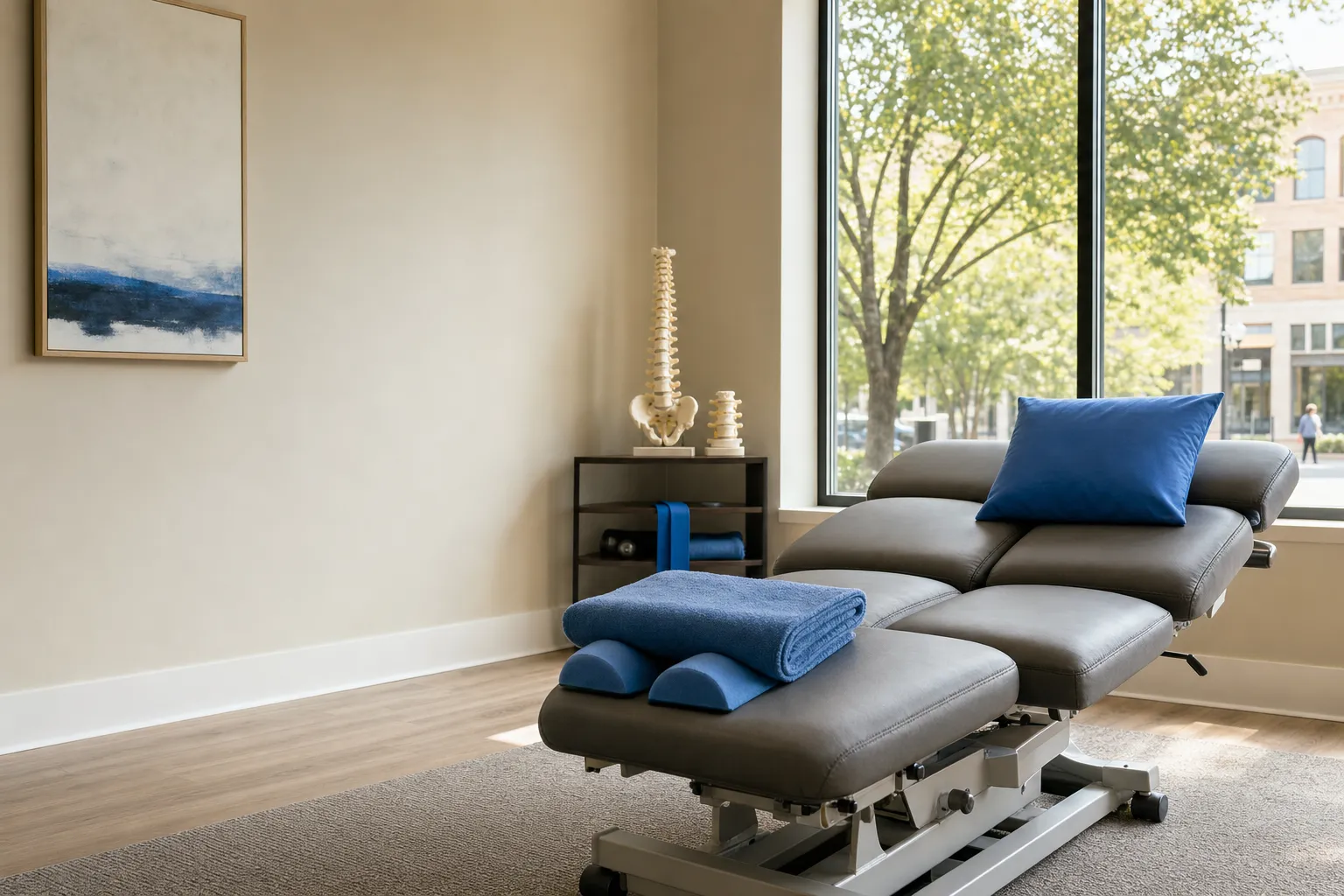
We build a strong chiropractic adjustment plan by starting with a focused assessment, setting clear measurable goals, choosing specific adjustment techniques for the problem, and adding movement coaching and lifestyle support so results last. That combination, monitored and modified over time, is what turns short term relief into better function and fewer repeat visits.
How we answer the question of what makes a plan strong
At Freedom Chiropractic and Wellness in Lake Geneva, Wisconsin we treat the plan itself as part of care. A strong plan tells you what we will adjust, why we chose those techniques, how we will measure progress, and what you will do between visits to protect gains. We keep the plan practical and measurable rather than promising quick fixes.
Our plans are built around three practical elements.
- Individualized assessment and diagnosis so adjustments match the cause of pain.
- Technique selection and sequencing so each visit advances the goals.
- Supportive care including corrective exercises, targeted stretching, and nutrition guidance so improvements stick.
Step one Assess and define measurable goals
A reliable plan starts with a clinical assessment and a clear problem statement. We evaluate movement, joint function, posture, and your pain history to identify the mechanical contributors to back or neck pain. With that information we set short term and medium term goals that are specific and measurable.
What measurable goals look like
- Reduce morning low back stiffness from a 6 out of 10 to a 3 out of 10 during daily activities.
- Regain full pain free rotation of a neck needed for driving or work tasks.
- Return to a sport specific movement such as bowling or running without limping.
Putting goals on paper helps us choose which adjustment types and supportive steps will have the biggest impact.
Step two Choose the right adjustment techniques and sequence
Not every adjustment fits every body. We use multiple spinal adjusting techniques and custom extremity adjustments to address each patient's specific needs under the guidance of Dr. Dan VanderWeit, a licensed chiropractor. Technique choice depends on your condition, age, activity level, and how your joints respond during the initial evaluation.
Common techniques we consider
- Hands on spinal adjustments for targeted joint motion and nervous system input.
- Low force or instrument assisted techniques when gentle correction is appropriate.
- Custom extremity adjustments to restore proper joint motion in shoulders, elbows, knees, and ankles.
Sequencing matters. We often begin with a gentle approach to reduce acute pain, progress to corrective spinal work to restore motion, and finish a phase with movement retraining so you can keep the improvement.
Step three Integrate corrective exercises and lifestyle supports
Adjustments create an opportunity for change. Without corrective exercise and practical lifestyle adjustments, gains can be temporary. We prescribe movement drills, mobility sequences, and focused stretches that match your goals and daily routine.
Typical supportive elements
- Targeted corrective exercises that address weak or under active muscles.
- Stretching progressions to preserve joint range of motion.
- Nutrition tips and general movement strategies to reduce inflammation and support tissue recovery.
We explain why each exercise matters and how it supports the adjustment plan so you can do the work safely between visits.
Step four Track progress and adapt the plan
A strong plan is not set in stone. We measure changes using the goals we set during assessment and adjust the plan when progress plateaus or new needs emerge. That might mean modifying technique selection, adding different exercises, or shifting the frequency of visits.
How we measure progress
- Symptom tracking during daily tasks.
- Range of motion and movement test comparisons session to session.
- Functional benchmarks tied to work, family activities, or sports participation.
These objective checks keep treatment grounded in real improvement rather than impressions.
What a typical plan looks like for common patients
We tailor plans to the person and the problem. Examples below illustrate how the pieces fit together without giving full do it yourself instructions.
Back pain in a desk worker
- Assessment focused on lumbar joint motion, hip mobility, and sitting posture risks.
- Short phase of hands on lumbar adjustments to reduce stiffness.
- Daily micro movement breaks and a set of corrective activation exercises to support spinal control.
Neck pain after a minor motor vehicle incident
- Care begins with careful screening and gentle techniques to reduce inflammation and tenderness.
- Progression to restored cervical motion with targeted adjustments and mobility drills.
- Education on sleep positions and workstation setup to limit re irritation.
Athlete recovering from a sprain
- Extremity adjustments to restore joint gliding and return to sport specific movement retraining.
- Integration with sports chiropractic work and return to play milestones.
Checklist Use this to evaluate whether a plan is strong
Plan evaluation checklist
- Is the assessment documented and tied to the problem statement?
- Are short term and medium term goals specific and measurable?
- Does the plan name the adjusting techniques and explain why they were chosen?
- Are corrective exercises and lifestyle steps included for between visit care?
- Is there a schedule for reassessment and adjustment of the plan?
Pro tips for patients considering a plan
Pro tip: Ask how progress will be measured and what a typical timeline looks like for your specific goal. That keeps care focused on results instead of vague promises.
At Freedom Chiropractic and Wellness we walk through expected milestones and what you can reasonably expect at each check in. If you want to dig into technique options first, read about our chiropractic adjustment services and how different approaches are applied.
Watch out Common plan pitfalls
Watch out: A plan that is vague about goals, does not include home exercise, or lacks reassessment dates often leads to stalled progress. Effective care requires clear steps and periodic review.
We emphasize education and measurable progress so patients know when a plan is working and when a change is needed.
How our local knowledge of Lake Geneva shapes treatment choices
Serving Lake Geneva, Wisconsin and surrounding communities influences practical aspects of our plans. We consider local activities such as weekend outdoor recreation and youth sports when setting return to play goals and exercise choices. That keeps plans relevant to your daily life.
For details about our location and how we serve the area see our Lake Geneva, Wisconsin location page.
Related topics and next reading
To expand your understanding of adjustments and aftercare, you might find these pages helpful.
- Adjustment Aftercare for what to expect after a visit.
- Adjustment Frequency to understand how often plans are reviewed.
- Choosing A Chiropractor for questions to ask when comparing care approaches.
Frequently asked questions
How does Freedom Chiropractic and Wellness create a chiropractic adjustment plan in Lake Geneva, Wisconsin?
At Freedom Chiropractic and Wellness in Lake Geneva, Wisconsin we create chiropractic adjustment plans by combining a detailed clinical assessment, specific measurable goals, chosen adjustment techniques, and supportive corrective exercises tailored to each patient. We document baseline findings, set short term and medium term benchmarks, and schedule periodic reassessments so the plan changes with your progress.
What adjustment types does Freedom Chiropractic and Wellness use for chiropractic adjustment plans in Lake Geneva, Wisconsin?
Freedom Chiropractic and Wellness uses multiple spinal adjusting techniques and custom extremity adjustments for chiropractic adjustment plans in Lake Geneva, Wisconsin based on the patient assessment and goals. Technique selection is guided by the nature of the problem, patient comfort, and the response seen during the initial visits.
How long does a chiropractic adjustment plan typically take at Freedom Chiropractic and Wellness in Lake Geneva, Wisconsin?
At Freedom Chiropractic and Wellness in Lake Geneva, Wisconsin the timeline for an adjustment plan varies by condition and goals and is set after the initial assessment. We create practical, measurable timelines tied to symptom reduction and functional benchmarks rather than fixed visit counts so progress is clear.
Does Freedom Chiropractic and Wellness include exercise and lifestyle guidance in adjustment plans in Lake Geneva, Wisconsin?
Yes, Freedom Chiropractic and Wellness includes corrective exercises, targeted stretching, and lifestyle guidance in adjustment plans for Lake Geneva, Wisconsin patients to support long term results. These home based elements are chosen to match the clinical findings and the patient’s daily routine.
When should I consider changing my chiropractic adjustment plan with Freedom Chiropractic and Wellness in Lake Geneva, Wisconsin?
At Freedom Chiropractic and Wellness in Lake Geneva, Wisconsin you should consider modifying your chiropractic adjustment plan when objective measures show a plateau, symptoms change, or your activity goals evolve. We review plans on scheduled reassessment dates and adjust technique, frequency, or supportive care based on those findings.
Key takeaway
A strong chiropractic adjustment plan combines clear assessment driven goals, appropriate adjustment techniques, corrective movement, and scheduled review. At Freedom Chiropractic and Wellness we design plans for measurable progress so patients in Lake Geneva, Wisconsin can return to the activities that matter to them.
Where to learn more
Read patient experiences and local information on our Google Business Profile and review our service and topic pages to learn more about how we work.
Learn more about Adjustment Types and how they inform a plan