
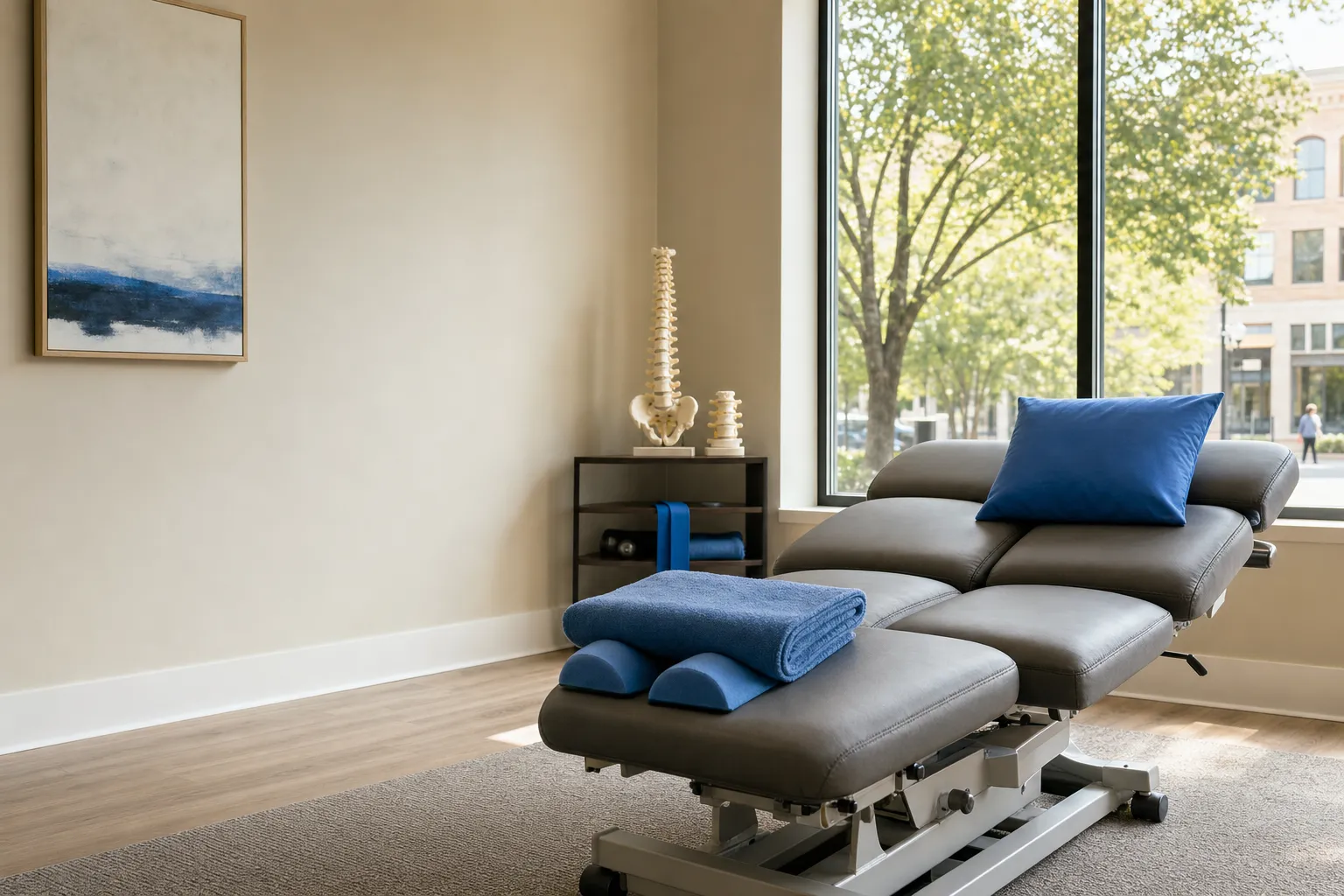
To prepare for a chiropractic adjustment in Lake Geneva, Wisconsin, wear comfortable clothing, bring any recent imaging and a list of medications, arrive ready to describe your symptoms and goals, and expect a focused exam followed by a personalized treatment plan.
What a chiropractic adjustment is
A chiropractic adjustment is a targeted, hands on or instrument assisted action that restores joint movement, eases nerve irritation, and supports better function. We perform adjustments as one part of a plan that also includes movement coaching, corrective exercise, and lifestyle guidance. At Freedom Chiropractic and Wellness Dr. Dan VanderWeit uses multiple spinal adjusting techniques and custom extremity adjustments to match the adjustment to your body and goals.
Why preparation matters in Lake Geneva
Good preparation helps you get the most from each visit. Lake Geneva has active families, weekend athletes, and office workers with similar patterns of pain and stiffness. Arriving prepared shortens intake time and gives us more usable treatment minutes so we can focus on measurable progress instead of logistics. Preparing also helps us identify when a particular technique or a referral is the safer choice.
We serve Lake Geneva and nearby communities from our clinic, and we tailor care plans for the common local activities that affect the spine, such as hiking around the lake, weekend sports, and jobs that require long periods of sitting.
Key concepts to know before your adjustment
- Evaluation first. A proper exam and medical history guide whether an adjustment is appropriate.
- Adjustment types vary. There are manual thrust adjustments, mobilizations, and instrument assisted options that differ in force and speed.
- Treatment is a plan. A single adjustment is rarely the whole solution. We combine adjustments with exercises, nutrition guidance, and lifestyle changes.
- Informed consent matters. We explain risks, expected sensations, and reasonable goals before treating you.
- Aftercare is part of success. Simple stretches, activity changes, and follow up visits support lasting improvement.
Common adjustment types we discuss with patients
We match technique to your exam findings, history, and comfort level. Common categories you may hear about include manual thrust adjustments, gentler mobilization, and instrument assisted adjustments such as an activator device. Each has tradeoffs in speed, control, and force. Because we use multiple spinal adjusting techniques and custom extremity adjustments, we can choose the approach that fits your needs.
| Adjustment approach | What to expect | When we often choose it |
|---|---|---|
| Manual thrust | Short, faster motion with a hands on contact, sometimes audible release | When joint restriction is localized and the patient tolerates a direct approach |
| Mobilization | Slower, gentler movement without a high velocity thrust | Patients who need lower force or have sensitive tissues |
| Instrument assisted | Light mechanical impulse using a hand held device | When precision or minimal force is preferred, or for extremity joints |
How to get ready on the day of your adjustment
Bring and do these things
- Any recent X rays, MRIs, or reports so we see prior findings.
- A list of current medications, supplements, and past surgeries.
- Comfortable, flexible clothing that allows movement of the spine and neck.
- Clear notes on which activities cause symptoms and your short term goals.
- Plan to arrive a few minutes early so we complete intake without rushing treatment.
- Before you leave home. Avoid a heavy meal immediately before a hands on visit. Light hydration is fine.
- When you arrive. Expect a focused exam, brief movement testing, and a short discussion of risks and goals.
- During the adjustment. Tell us if a movement feels painful. We adapt technique to your comfort and safety.
Pro tip: If you play sports in Lake Geneva or work at a desk, tell us the specific activities and frequency. That detail helps us select the most effective adjustment style and rehab exercises.
Watch out: If you have a history of bleeding disorders, uncontrolled high blood pressure, recent fractures, or certain neurological symptoms, tell us before any adjustment. We will modify care or coordinate with your primary provider when needed.
What to expect during your first adjustment visit
Our first priority is a careful evaluation. We review your history, perform movement and orthopedic tests, and examine posture and joint motion. If imaging or medical records are relevant, we review them with you. Then we explain what type of adjustment we recommend and why, what sensations are normal, and what outcomes are reasonable.
Because we focus on measurable progress, we set short term goals such as reduced pain with a particular movement or improved range of motion by a specific date. Those goals guide follow up visits and home exercises.
Related services that support adjustments
Adjustments are most effective when combined with supportive services. At our clinic those services include sports chiropractic for athletes, targeted back pain treatment programs, neck pain treatment, movement coaching, and nutritional guidance. Learn more about our chiropractic adjustment service at Chiropractic Adjustment and how we approach athlete care on the Sports Chiropractor page.
How local conditions affect care in Lake Geneva
Lake Geneva patients often come to us after weekend sports, gardening, or long days at a desk. We design plans with local activity in mind, and we coordinate return to play or full activity timelines for weekend athletes and families. For more on choosing care that fits your needs, see our guide on Choosing A Chiropractor.
Helpful external resources and citations
For balanced information on spinal manipulation and safety see the National Center for Complementary and Integrative Health overview of spinal manipulation and low back pain at NCCIH. The American Chiropractic Association provides patient resources on what to expect during chiropractic care at American Chiropractic Association. For national workforce and outlook information on chiropractors see the U.S. Bureau of Labor Statistics occupational profile at Bureau of Labor Statistics.
Common questions patients ask before an adjustment
Will an adjustment hurt?
Most people feel pressure and movement rather than sharp pain. Some soreness like after exercise can occur afterward. We choose a technique that matches your tolerance and health history.
Is one adjustment enough?
An adjustment can provide immediate relief, but lasting change usually requires a short program of treatments plus at home exercises and activity changes. We set measurable goals so you and we can track progress.
Are adjustments safe?
When performed after a proper exam, adjustments have a good safety record for the conditions they address. Certain medical conditions require modification or alternative approaches. We screen for those during intake, and we coordinate care with other providers when needed.
Related locations and pages to help you learn more
For practical details about our clinic and service area see our location page for Freedom Chiropractic and Wellness in Lake Geneva at Freedom Chiropractic and Wellness location page. To read more about adjustment types in depth see our topic page on Adjustment Types. For help with back pain specifically visit our Back Pain Treatment page.
Key takeaway
Arriving prepared makes your visit more efficient and improves results. Bring records, wear flexible clothing, share your goals, and expect a careful exam followed by a technique chosen for your needs.
Frequently asked questions
What should I wear to a chiropractic adjustment?
Wear comfortable, non restrictive clothing that allows easy movement of your spine and neck. Athletic wear or relaxed clothing works well.
Should I avoid food or medication before an adjustment?
No special fasting is required. Avoid an overly heavy meal right before a hands on visit. Continue medications unless your prescribing clinician has told you otherwise.
Will I hear a popping sound during the adjustment?
Some adjustments produce an audible release. That sound is air moving in the joint and does not indicate harm. If you are concerned, tell the clinician and we will adjust technique.
How soon will I feel better after an adjustment?
Some people feel immediate relief, others notice gradual improvement over several visits when adjustments are combined with exercises and lifestyle changes. We set short term goals so progress is clear.
When should I avoid an adjustment?
Avoid adjustments when you have acute red flag symptoms such as fever with spine pain, recent major trauma, or certain neurological deficits. We screen for these conditions and will recommend alternative care or referral when appropriate.
Learn more and find directions
Read patient reviews and get directions on our Google Business Profile, and explore related topics and services on our site to prepare for your visit.
Adjustment Types | Chiropractic Adjustment | Freedom Chiropractic and Wellness location page