
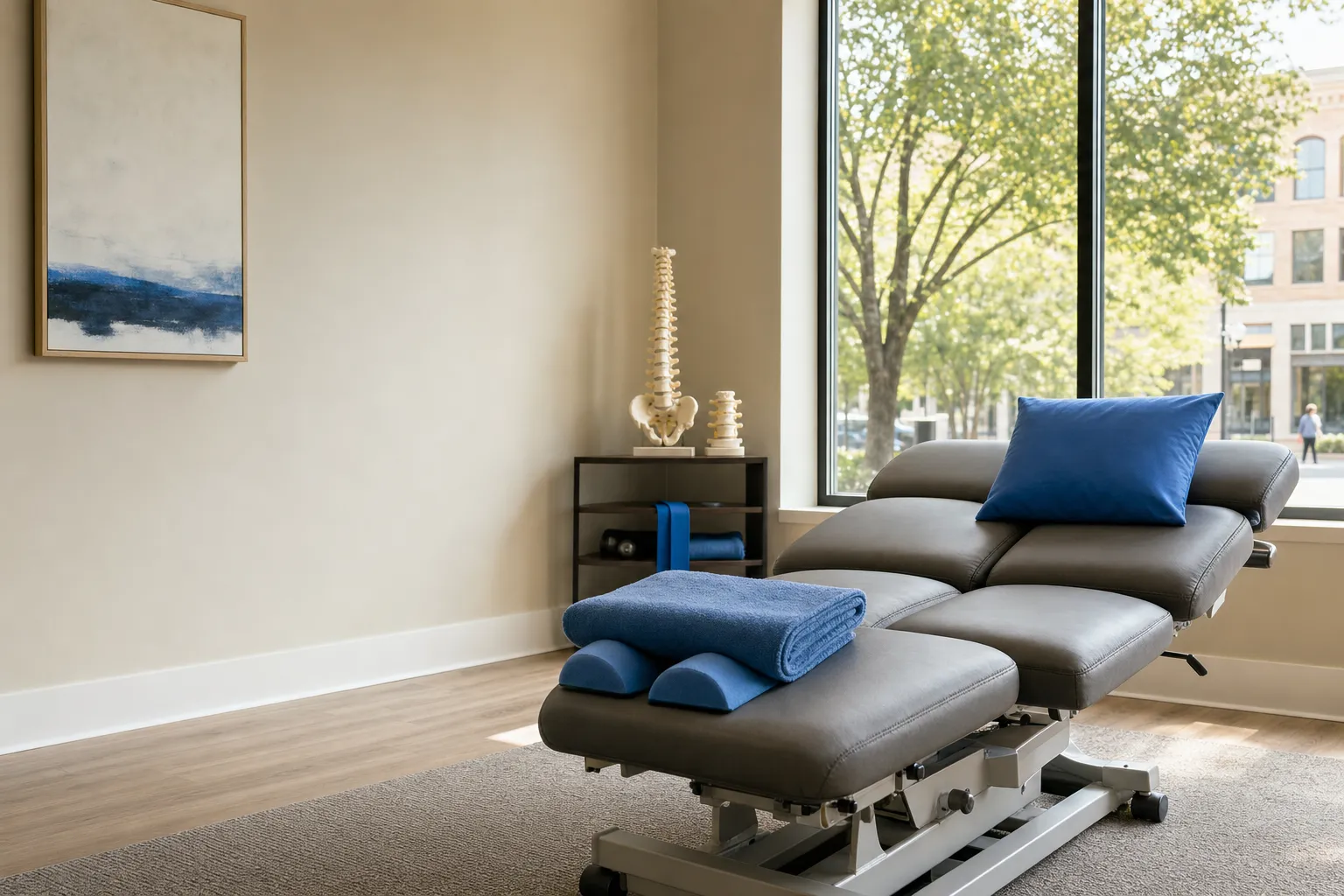
Ask these things before starting back pain treatment: what is the likely cause of your pain, what specific techniques will be used, what measurable goals and timeline we expect, what safety checks or contraindications apply, and what you should do at home to support recovery. We answer each of these questions below and explain how we structure a clear, measurable care plan for chronic back pain in Lake Geneva.
What is chronic back pain
Chronic back pain is pain in the lower or mid back that lasts longer than three months, or pain that recurs frequently enough to limit activity and quality of life. It can come from joint irritation, disc degeneration, muscle imbalance, nerve compression, or a combination of factors. At Freedom Chiropractic and Wellness, we assess movement, spine alignment, and everyday habits to form a practical diagnosis rather than a label that stops treatment.
Why this matters in Lake Geneva
Chronic back pain affects people across every age group, from weekend athletes and desk workers to seniors and families balancing activity and work. In Lake Geneva, many patients combine outdoor activity with desk jobs, which creates a common pattern of mobility deficits plus repetitive strain. That mix makes a clear, local approach to care important. We tailor plans to the activities people do around Lake Geneva, whether gardening, lifting at work, or returning to running along the lakefront.
Key concepts to understand before you start
- Diagnosis matters. A working diagnosis guides what we treat first, and it can change as we see measurable progress.
- Goals should be measurable. Pain reduction, regained range of motion, improved sleep, or return to a specific activity are concrete goals we track.
- Multiple tools are normal. Spinal adjustments, extremity adjustments, movement training, and lifestyle guidance are often combined.
- Home work matters. Short corrective exercises and movement habits determine whether gains last.
- Safety and screening are routine. We review red flags, medical history, and imaging when indicated to keep care safe.
What to ask about diagnosis and assessment
Early clarity about diagnosis reduces wasted visits. Ask how your practitioner reached a diagnosis, which tests they used, and how confident they are in that assessment. At our clinic we explain findings from the movement exam, orthopedic and neurologic tests, and any imaging reports, then translate that into a practical plan with measurable short term and long term goals.
Questions to check diagnosis clarity
- What is the most likely cause of my back pain?
- Which tests or findings support that diagnosis?
- Are there red flags that require medical or imaging follow up?
What to ask about treatment approach and techniques
Ask which specific techniques will be used, and why those techniques suit your condition. We use multiple spinal adjusting techniques and custom extremity adjustments, chosen to match your mobility limits and symptom pattern. Ask how each technique contributes to your goals, and whether modifications will be made for age, pregnancy, or a prior injury.
| Approach | What it does | When we recommend it |
|---|---|---|
| Chiropractic adjustments | Restore joint mobility, reduce irritation, improve movement patterns | When joint restriction or mechanical pain is a primary driver |
| Movement training and corrective exercise | Improve strength and control, reduce recurrence risk | When muscle imbalance or poor movement contributes to pain |
| Activity modification and lifestyle coaching | Reduce aggravating loads and support healing | When work or recreation habits perpetuate symptoms |
What to ask about timeline and measurable goals
Ask what improvement looks like and when to expect it. A clear plan names short term signs of progress, like decreased night pain or improved forward bend, and longer term goals, such as returning to running or lifting without pain. We design care plans around observable changes and adjust frequency and methods based on progress. If you need a second opinion or imaging, we will recommend that as part of the plan.
Safety screening and contraindications
Safety starts with a full history and screening exam. Ask how the clinic screens for conditions that change treatment, such as signs of nerve compression, unexplained weight loss, or past surgeries. We follow accepted screening practices and will refer to medical colleagues if findings warrant medical imaging or specialty evaluation.
We follow guidance from national chiropractic organizations and current clinical evidence when we evaluate safety. For general information on chiropractic practice and recommended standards, see the American Chiropractic Association resources.
Questions about experience and special populations
Ask how often the practitioner treats your specific situation, whether they have experience with athletes, pregnancy related back pain, seniors, or auto injury patients. At Freedom Chiropractic and Wellness, Dr. Dan VanderWeit leads a practice that works with athletes, families, and people managing chronic pain, so we can match technique and aftercare to your needs.
Home care and supportive measures
Ask what you should do outside clinic visits. Effective home care is brief, practical, and targeted. We provide corrective exercises, targeted stretching, and nutritional guidance to support recovery. Ask for a simple daily routine that complements in clinic adjustments and for clear signs that home work is helping.
Pro tip: A short daily movement routine that fits your schedule is more effective than a long routine done inconsistently. We focus on two or three exercises you can repeat in five to ten minutes.
How to evaluate progress and when to change course
Ask how progress will be measured and when the treatment plan will be reviewed. We set checkpoints and objective measures, such as range of motion, strength tests, and activity milestones. If progress stalls, we reassess diagnosis, consider additional imaging, or coordinate care with medical specialists and physical therapists.
Common patient questions answered
Will chiropractic treatment make my pain go away immediately?
Some patients feel immediate relief, many improve gradually over several visits, and others need a longer plan to rebuild movement and strength. Immediate change is not the only sign of effective care. We track consistent improvement in function and symptoms rather than promising instant results.
Is chiropractic safe for older adults and pregnant women?
Yes, with appropriate modifications. We adapt techniques to the patient, and we screen for conditions that change care. If you are pregnant or have significant medical history, tell us up front so we can adjust the approach.
How many visits will I need?
Visit counts vary with the condition severity, goals, and how you respond to care. Instead of a fixed number up front, we recommend scheduled reviews at defined checkpoints to confirm progress and adjust the plan.
Related services to consider
Back pain often benefits from an integrated approach. We provide chiropractic adjustment and sports chiropractic services that work alongside targeted corrective exercise and lifestyle counseling. Learn more about our Back Pain Treatment approach and our general Chiropractor services for how we integrate these elements into care plans.
Back Pain Treatment, Chiropractor services, and Sports Chiropractor can be combined depending on your goals and activity level.
Related locations and local context
We serve Lake Geneva and surrounding communities, and we plan care around the activities people do locally. If you want to explore other services and locations we serve, see our Locations hub. Local weather, seasonal activities, and common jobs influence the movement patterns we see, so we always factor those into a realistic plan for recovery.
Find local resources and location details at the locations page: Locations.
Helpful resources and evidence
For background on chiropractic practice and standards, the American Chiropractic Association provides practitioner guidance and public resources. For balanced information about what chiropractic is and how it is used within health care, the National Center for Complementary and Integrative Health at the National Institutes of Health is a good reference. For workforce and occupational information about chiropractors, the Bureau of Labor Statistics publishes detailed occupational data and projections.
Selected external sources:
Checklist Before You Start
- Confirm diagnosis clarity. You understand the likely cause and the tests that support it.
- Agree measurable goals. You and the practitioner set short term and long term milestones.
- Know the techniques. You know which adjustments and supportive measures will be used and why.
- Review safety screening. Red flags are checked and documented.
- Get a simple home plan. You have a brief daily routine and guidance on activity modification.
Key takeaway
Before starting back pain treatment, focus on understanding the diagnosis, the specific techniques and why they suit your case, measurable goals and timeline, safety screening, and a brief home plan that supports lasting improvement. We make those things clear at Freedom Chiropractic and Wellness so you can judge progress objectively.
Frequently asked questions
What should I bring to my first visit?
Bring a list of current symptoms, any imaging reports you have, recent medical history, and a description of your daily activities that influence your back. That helps us build a quicker, practical plan.
Will I need imaging like X rays or MRI?
Not always. Imaging is used when history or exam suggests structural issues that change care, or when symptoms do not follow an expected recovery pattern. We order or refer for imaging when it will change management.
How do you work with other medical providers?
We coordinate care when needed, sharing our findings and treatment plan with your primary care provider or specialists. If your condition requires medical intervention, we will help arrange the appropriate referral.
What if I do not improve as expected?
If progress stalls we reassess diagnosis, adjust our approach, and consider additional testing or referral to a medical specialist or physical therapist. The plan is dynamic and based on measurable results.
Next steps and where to learn more
Read our topic page on chronic back pain to dive deeper into causes and common treatments, and visit our Back Pain Treatment page for a description of how we structure care. To learn more about where we serve and find directions, check our Google Business Profile and review recent patient feedback. You can also explore our Locations hub and related topics to prepare for your first visit.
Chronic Back Pain topic | Back Pain Treatment service | Locations hub