
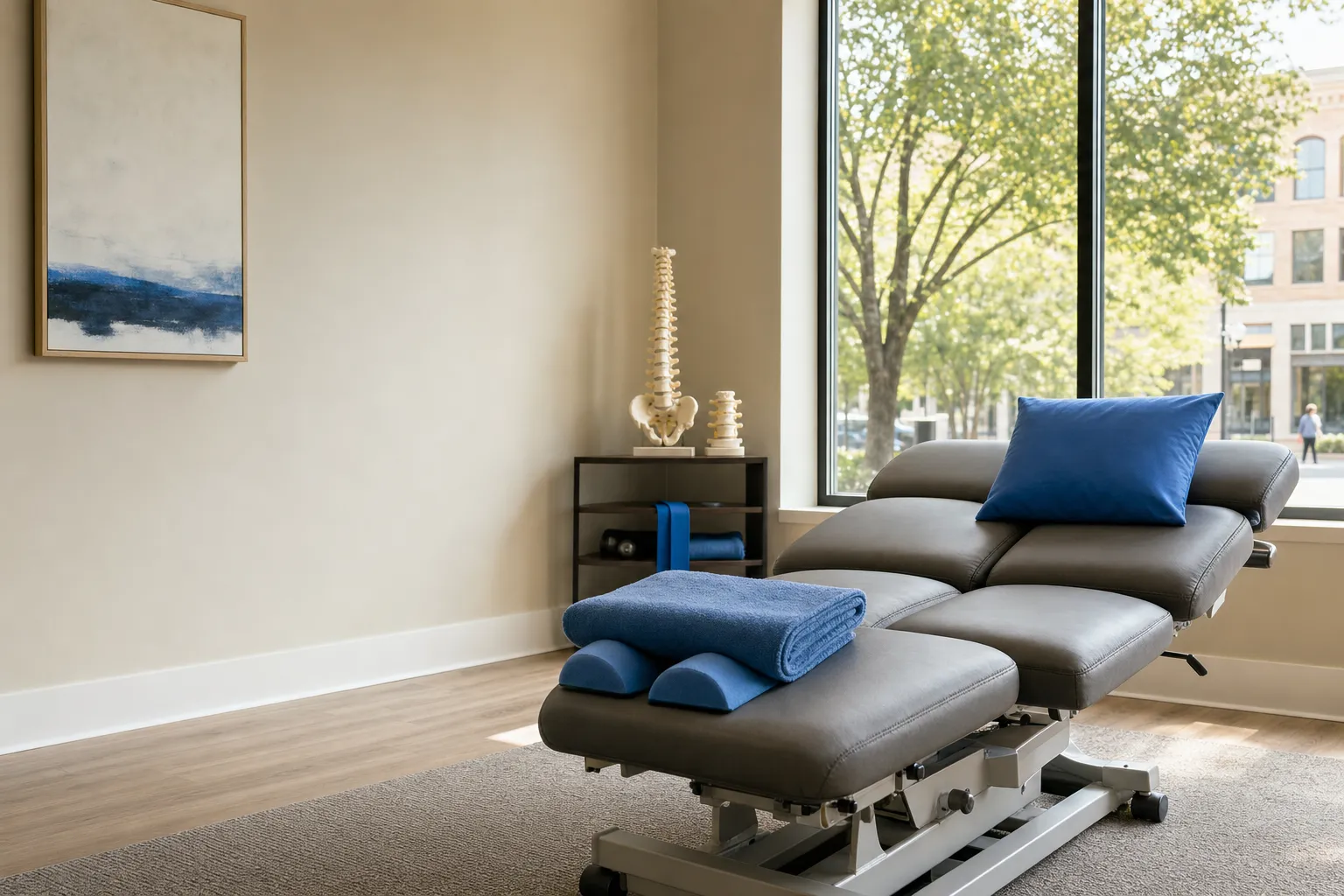
Low back pain in Lake Geneva most commonly shows up as localized ache, sharp or shooting pain into the buttock or leg, stiffness with prolonged sitting or after yard work, and trouble bending or lifting. We see these symptoms from muscle strain, disc irritation, facet joint degeneration, sacroiliac problems, and nerve root irritation, and our approach is to identify the main cause, relieve pain, and restore reliable movement.
Common causes of low back pain we treat in Lake Geneva
Different structures in and around the spine generate low back pain. When you understand the usual causes, you can make better choices about care and prevention.
- Muscle and ligament strain. Overuse, a sudden lift, or repetitive yard work and lifting can sprain soft tissues and cause localized pain and stiffness.
- Disc related pain and radiculopathy. A bulging or herniated disc can press on a nerve root, producing shooting pain, numbness, or weakness down a leg, a pattern often called sciatica.
- Degenerative disc disease and facet joint arthropathy. Wear and tear change joint mechanics and can produce chronic, activity related soreness and stiffness.
- Sacroiliac joint dysfunction. Pain low and to one side that increases with standing on one leg, walking uphill, or changing position can come from the sacroiliac joint.
- Referred pain from hip or abdominal conditions. Sometimes hip arthritis or pelvic issues create pain that feels like it comes from the low back.
- Postural and repetitive strain from sitting. Long hours at a desk or driving compress discs and fatigue spinal stabilizers, which is a common pattern for office workers and commuters around Lake Geneva.
How these conditions typically present
Symptoms we hear most often
Patients usually tell us about one or more of the following: dull aching in the low back, sharp pain with certain movements, pain that radiates into the buttock or down the leg, numbness or tingling, reduced bending or twisting, and trouble with sleep because of discomfort.
Signs of nerve involvement
When a nerve root is irritated you may notice shooting pain, pins and needles, or weakness in a specific muscle group. Activities like coughing or sneezing may increase symptoms if a disc is involved. These patterns help us distinguish disc related pain from local muscle problems.
Red flags that need urgent evaluation
There are uncommon but important signs that require prompt medical attention: sudden loss of bowel or bladder control, progressive weakness in both legs, fever with back pain, or a history of cancer. If you have any of these, seek emergency care before returning to routine back care.
How we evaluate low back causes at Freedom Chiropractic and Wellness
We combine a focused history, hands on examination, and selective testing to identify the most likely pain generator. Our goal is to make clear, measurable treatment goals rather than guessing.
- Detailed history. We ask what makes pain better or worse, how it started, your activity and work demands, and any prior injuries.
- Physical exam. We assess posture, range of motion, joint motion, muscle tone, and basic neurological signs including reflexes and muscle strength.
- Provocative tests. Specific tests such as a straight leg raise or sacroiliac stress tests help narrow the cause.
- When imaging helps. We order or recommend imaging, like X ray or MRI, only when it will change management, for example when nerve compression or fracture is suspected.
- Collaborative referrals. If your condition requires imaging interpretation or medical care beyond our scope, we coordinate with physicians and imaging centers in the Lake Geneva area.
Our approach is consistent with chiropractic education standards. For a general overview of the chiropractic profession and scope of practice, see Palmer College of Chiropractic.
For occupational data and trends related to chiropractic practice, the Bureau of Labor Statistics maintains an occupational profile for chiropractors.
Pro tip: Describe your daily routine when you first call or visit. Details about your work, weekend activities, and recent changes in exercise help us find the root cause faster.
What treatment usually looks like with us
We build practical, measurable care plans focused on reducing pain and restoring function. Treatment commonly includes spinal adjustments, targeted soft tissue work, movement coaching, and a short plan of corrective exercises. We combine hands on care with lifestyle and nutritional guidance to improve long term results.
Common components of care you may receive at Freedom Chiropractic and Wellness include:
- Specific spinal and extremity adjustments using multiple techniques.
- Sports chiropractic strategies for athletes and weekend warriors who need to recover function quickly and safely.
- Movement retraining, core stabilization, and progressive loading to reduce recurrence.
- Advice on ergonomics and routine changes to reduce aggravating activities.
Our approach is supported by instrument manufacturers when instrument adjusting is appropriate. For details about instrument use and safety we reference manufacturer documentation such as the Activator Methods materials.
We document measurable progress so you can see improvements in pain, range of motion, and daily function. Dr. Dan VanderWeit leads care as a licensed chiropractor and we emphasize education every step of the way.
Everyday strategies to protect your low back in Lake Geneva
You do not need to avoid activity. The right choices help you recover faster and lower recurrence risk.
- Keep moving with variety. Alternate sitting with standing, and break up long drives or desk sessions with short walks.
- Build core and hip strength. Strengthening the trunk and hips reduces load on the low back during lifting and sports.
- Stretch selectively. Gentle hamstring and hip mobility help with bending activities and lawn care.
- Use sensible lifting mechanics. Keep loads close to your body, bend at the hips and knees, and avoid twisting while lifting.
- Plan recovery after activity. After a long day of gardening or boating, spend time on mobility and a short recovery routine to reduce soreness.
Checklist: When to schedule a hands on evaluation
- Pain lasting more than two weeks and not improving with home care
- Pain limiting normal activities such as walking, work, or sleep
- Recurring episodes that resolve temporarily but return worse
- Nerve symptoms such as numbness, tingling, or weakness in a leg
Watch out: Avoid prolonged bed rest and aggressive self manipulation without professional guidance. Those approaches can delay recovery or make nerve irritation worse.
What to expect during a visit in Lake Geneva
At your first visit we perform a focused exam, explain our findings in plain language, and outline a conservative plan with measurable goals. Typical visits include hands on adjustments, soft tissue work, and coaching on exercises or movement patterns.
We serve Lake Geneva and surrounding communities and tailor plans to your lifestyle, whether you are a desk worker, athlete, parent, or retiree. If you want to read more about causes specifically, we have a deeper overview on our Low Back Causes topic page.
To learn how our hands on spinal work fits into an overall plan, see our Back Pain Treatment page. If you are curious about specific adjusting techniques we use, our Chiropractic Adjustment service page explains methods and aftercare.
Common misconceptions about low back pain
Pros of early conservative care
- Faster pain relief for many soft tissue and mechanical problems
- Reduced need for strong pain medications in many cases
- Focus on restoring function and preventing recurrence
Cons and limits to know
- Some structural problems may need imaging or medical referral
- Immediate complete resolution is uncommon for degenerative conditions
- Sustained improvement usually requires active participation with exercises and lifestyle change
Key takeaway
Low back pain in Lake Geneva comes from several common sources including muscle strain, disc irritation, joint degeneration, and sacroiliac dysfunction. We evaluate the movement patterns and symptoms that point to the main cause, and we use hands on care plus guided movement, nutrition advice, and practical plans to get you moving reliably again.
Frequently asked questions
What usually causes sciatica like leg pain?
Sciatica often comes from pressure or irritation of a lumbar nerve root, commonly due to a bulging or herniated disc, but it can also come from inflammation near the sacroiliac joint or tight muscles. A focused exam helps locate the source and guide treatment.
Do I need imaging like an MRI for low back pain?
Not always. We reserve imaging for cases where severe neurological signs, trauma, suspicion of fracture, or symptoms that fail to improve with conservative care suggest it will change treatment. Many mechanical low back problems respond well to hands on care and guided rehabilitation.
Can chiropractic adjustment make a herniated disc worse?
When performed after a careful evaluation, chiropractic adjusting is generally safe and aims to reduce nerve irritation by improving joint motion and mechanics. We adapt technique to your condition and use instrument based methods or gentler approaches when appropriate.
How many visits will I need to feel better?
The number of visits depends on the diagnosis, symptom severity, and how long the problem has been present. We set measurable goals and reassess progress regularly so you know whether the plan is working.
Is chiropractic care appropriate for older adults and people with chronic conditions?
Many older adults and patients with chronic back conditions benefit from conservative care that includes gentle adjustments, mobility work, and strength training. We adapt the plan to medical history and coordinate with other providers when necessary.
Learn more and check our local presence
Read Google reviews and get directions by viewing our Google Business Profile, then explore related information on our site to learn more about causes and treatments for low back pain.