
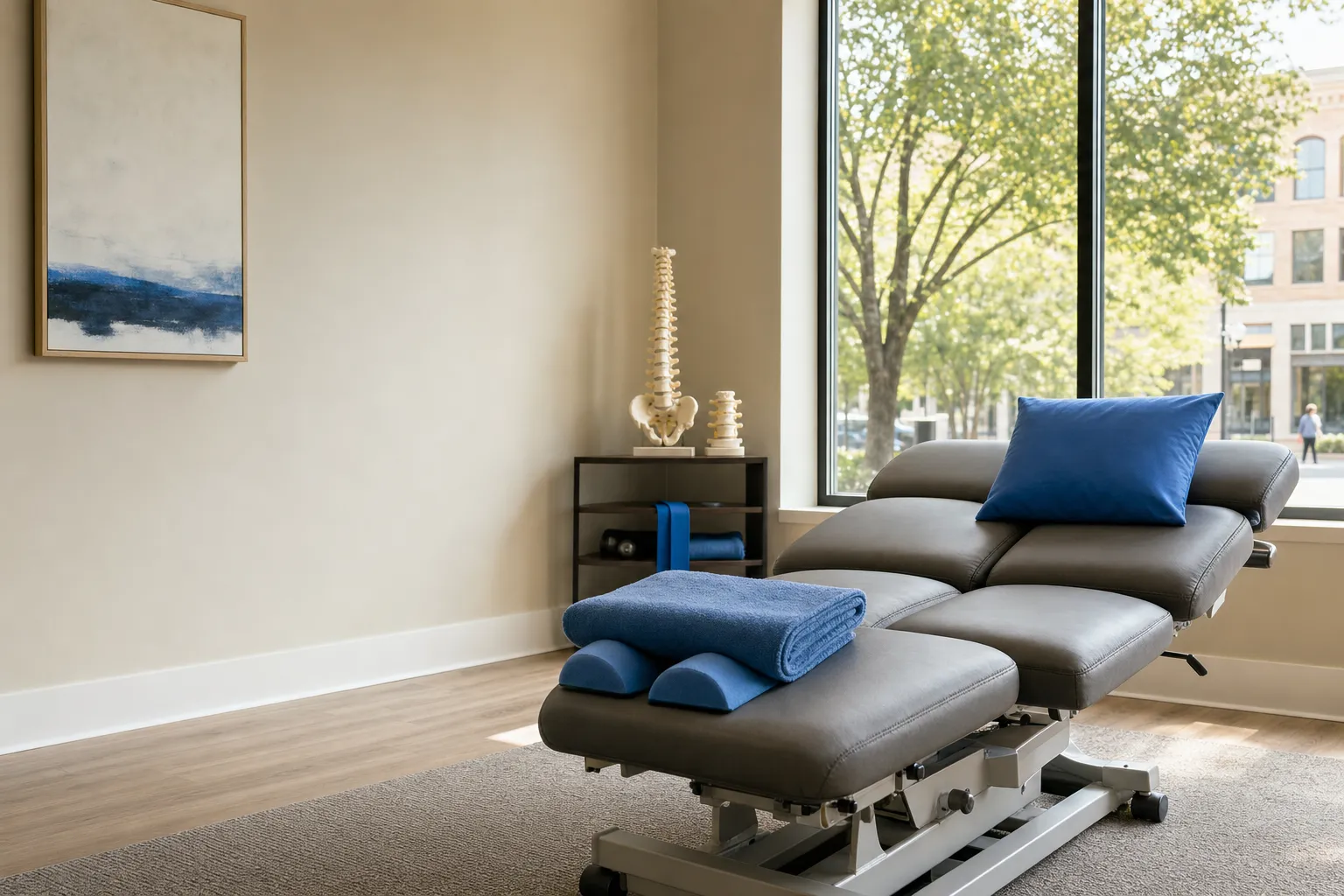
Sports injury prevention matters because preventing a problem is almost always easier than fixing it. We focus on reducing injury risk, preserving performance, and keeping athletes in Lake Geneva active through targeted adjustments, movement training, and practical lifestyle changes.
What sports injury prevention means
Sports injury prevention is a set of proactive practices designed to lower the chance of sprains, strains, joint pain, and overuse injuries. It combines spinal and extremity care, movement screening, strength and mobility work, and recovery strategies. In our practice we treat the athlete and the sport, not just the painful spot.
How we describe the goal in one sentence: prevent injuries that interrupt training and daily life by identifying mechanical risks and giving athletes practical tools to move better and recover faster.
Why this matters in Lake Geneva
Lake Geneva has a wide range of athletes, from youth baseball players and high school track competitors to weekend cyclists and recreational skiers. Local terrain, seasonal sports, and the travel patterns of our community affect how and when injuries appear. Preventive care keeps athletes available for practices, races, and family activities here in Lake Geneva and surrounding communities.
We see athletes whose problems began with a small imbalance, then grew into chronic back or neck pain. Preventive care stops that progression by addressing the root movement and strength issues early.
Key concepts every athlete should know
- Movement screening. A quick assessment of how you squat, lunge, jump, and rotate to find weaknesses or asymmetries.
- Joint mobility and stability. Good range of motion plus control through that range reduces stress on soft tissues.
- Load management. Balancing training, rest, and recovery to avoid overuse injuries.
- Targeted adjustments. Spinal and extremity adjustments to restore joint mechanics and reduce compensatory strain.
- Corrective exercises. Short, measurable routines to build lasting strength and movement patterns.
- Recovery habits. Sleep, hydration, nutrition, and movement breaks that support tissue healing.
Common scenarios and what we do
Preseason checks
Before a season starts we screen athletes for side to side differences, limited ankle or hip motion, and postural patterns that predict common injuries. That lets us prioritize the few changes that yield the most protective benefit.
Recurring low back or neck pain
For athletes who get repeated flare ups, we look beyond the painful region. Tight hips, foot mechanics, and shoulder control often feed into spinal strains. Our care pairs hands on adjustments with movement coaching and home exercises so results hold between visits.
Return to play after a minor injury
When someone returns from a sprain, we test strength, proprioception, and sport specific movement. Passing objective markers reduces the risk of reinjury.
Pre activity checklist for athletes
Simple checklist before practice or competition
- Warm up gradually for 8 to 15 minutes with dynamic movement.
- Do sport specific mobility drills for hips, shoulders, and ankles.
- Use brief activation exercises for core and glute muscles.
- Check shoes or equipment for wear and fit.
- Plan post activity recovery with hydration, light stretching, and sleep.
How preventive care differs from reactive care
| Approach | Focus |
|---|---|
| Preventive care | Identify and correct movement faults, maintain joint function, and reduce injury risk before pain starts. |
| Reactive care | Treat painful symptoms after they arise, then try to restore function and prevent recurrence. |
What good prevention looks like in practice
Good prevention is measurable, simple, and repeatable. We set clear goals such as improved single leg balance time, restored ankle dorsiflexion, or pain free rotation. We prefer short programs the athlete will actually follow, and we reassess progress so the plan evolves with the season.
Pro tip: Small objective improvements, measured weekly, are a better sign of real progress than vague statements about feeling better.
Warning signs you should get assessed
Watch out: Persistent pain that limits practice, new numbness or tingling, recurrent instability or frequent flare ups are signals you should be evaluated by a licensed clinician before returning to full sport load.
Because Dr. Dan VanderWeit is a licensed chiropractor who uses multiple spinal adjusting techniques and custom extremity adjustments, we can evaluate how joint mechanics and movement patterns may be contributing to those warning signs.
How we apply sports chiropractic to prevention
Our preventive approach mixes targeted chiropractic adjustments with movement coaching and lifestyle advice. We do hands on work to improve joint mechanics, prescribe specific corrective exercises, and support recovery with practical nutrition and sleep guidance. Plans are personalized, measurable, and designed to keep you competing and active in Lake Geneva.
For more on our specific sports focused services see our Sports Chiropractor page and learn about how adjustments and movement work together.
Related services that support injury prevention
- Chiropractic Adjustment. Restores joint motion and reduces compensatory strain, which lowers injury risk. See our Chiropractic Adjustment page for technique information.
- Back Pain Treatment. For athletes with recurrent back issues we combine stabilization and flexibility work with hands on care. Read about our Back Pain Treatment.
- Neck Pain Treatment. Addressing neck mobility and posture helps overhead athletes and those who carry rotational loads. See our Neck Pain Treatment page for details.
Related locations and community considerations
We serve athletes across Lake Geneva and nearby communities. Local fields, trails, and ice venues create seasonal injury patterns. When you come in we factor in where and how you train so prevention strategies match your real life demands. Learn more about our Lake Geneva location on our clinic page Freedom Chiropractic and Wellness in Lake Geneva.
Helpful resources and further reading
- Chiropractic overview on Wikipedia for background on the profession and common techniques.
- Wisconsin Department of Safety and Professional Services for licensing information and scope of practice.
- Explore related topic pages on our site such as Sports Injury Prevention and Choosing A Chiropractor for questions to ask and how to assess a care plan.
Key takeaway
Prevention combines targeted care, measurable movement work, and smart recovery habits. That approach keeps athletes training, competing, and enjoying life in Lake Geneva with fewer interruptions from injury.
Frequently asked questions
Can chiropractic care prevent sports injuries?
Yes, when delivered as part of a broader prevention plan. Chiropractic adjustments improve joint mechanics, and when paired with movement training and load management they reduce the mechanical stresses that lead to many common sports injuries.
How often should an athlete get a preseason check?
We typically recommend a screening before the season or event, and periodic checks during heavy training blocks. Frequency depends on the sport, previous injuries, and training load.
Are adjustments safe for youth athletes?
Adjustments are generally safe when provided by a licensed practitioner who adapts force and technique to the athlete's age and size. Dr. Dan VanderWeit tailors care to each patient, including younger athletes.
What signs mean I should stop training and see someone?
Stop and get evaluated for persistent pain that limits activity, new numbness or tingling, mechanical instability, or when pain fails to improve after a few days of rest and conservative care.
Learn more and check our local presence
Read reviews, find directions, and view our hours on our Google Business Profile. To learn more about how we approach prevention explore our services and topic pages on this site.