
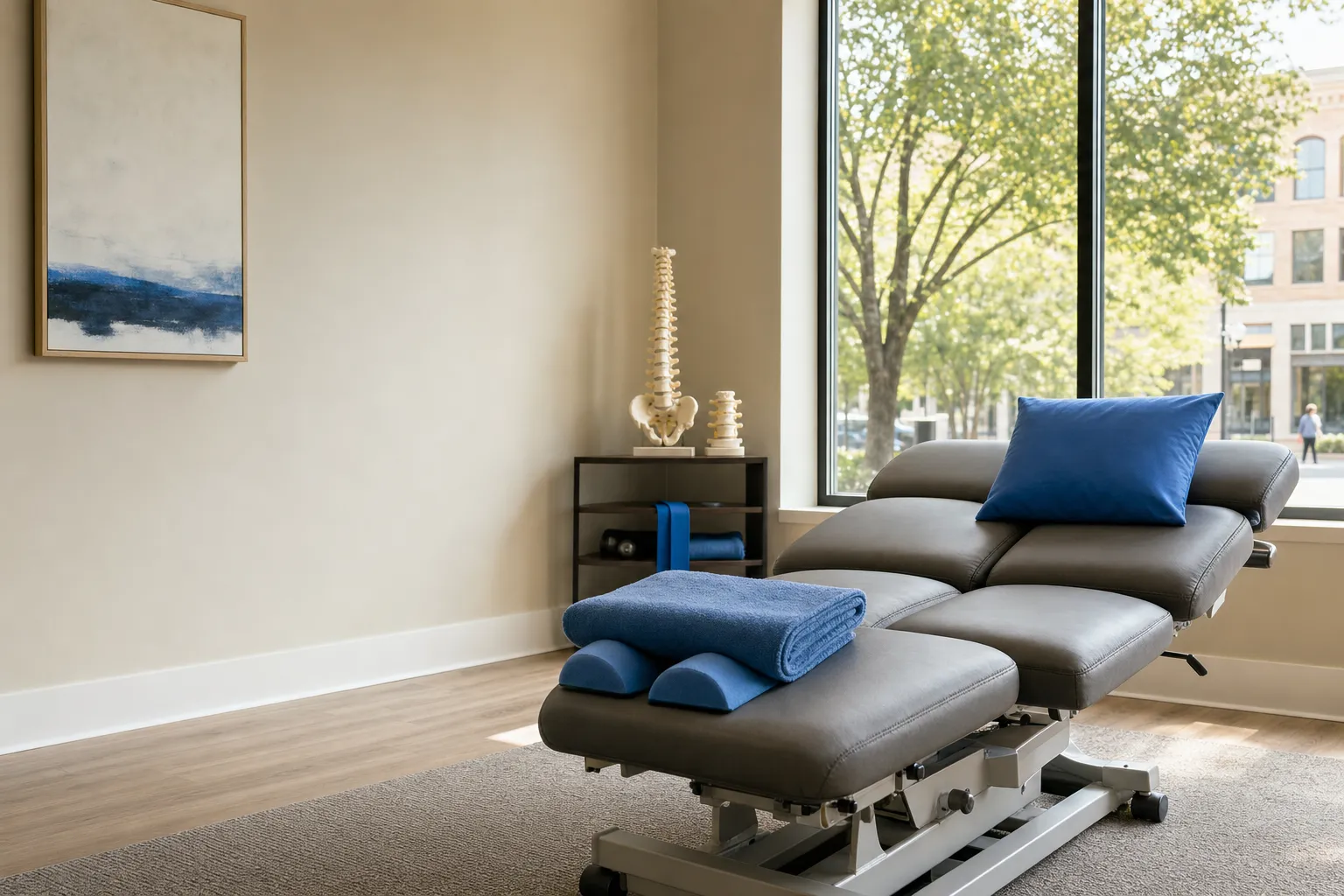
Neck pain from whiplash needs different treatment across Lake Geneva because the cause, severity, and the person affected determine the safest and most effective care. At Freedom Chiropractic and Wellness we tailor plans after a focused review that accounts for the injury mechanism, your age and activity level, and local seasonal risks.
How whiplash varies and why that matters
Whiplash describes a range of neck strain patterns caused by sudden acceleration and deceleration, most commonly in motor vehicle crashes. Not every whiplash injury looks the same. Two key facts guide our approach: the way the head and neck moved at the moment of injury, and the patient receiving care. Those two variables change the risk of ligament sprain, muscle strain, joint irritation, or nerve involvement, and they change which therapies help most.
Common local causes in Lake Geneva
- Auto collisions on icy roads in winter and busy holiday traffic patterns.
- Recreation and water sports injuries during warmer months that involve sudden impact or falls.
- Sports collisions and tackles for local youth and adult leagues.
- Falls on uneven sidewalks or trails around the lake during spring and fall.
Season and activity matter. For example, a low speed rear end collision on a snowy road may produce a different tissue injury than a fall from a paddleboard, and our initial plan reflects those differences.
How we review a whiplash patient at Freedom Chiropractic and Wellness
When someone with whiplash comes to us, we follow a consistent clinical pathway that personalizes treatment rather than applying a single protocol.
- Focused history. We document how the injury happened, current symptoms, prior neck or spine problems, and other medical conditions.
- Physical exam. We assess range of motion, joint play, ligament sensitivity, muscle tone, and neurologic signs such as numbness or weakness.
- Movement and functional testing. We look at posture, shoulder and thoracic mobility, and how the neck responds to load and movement.
- Red flag screening. We rule out serious conditions that require urgent medical care, such as signs of spinal cord compression or unstable fractures.
- Imaging only when indicated. We order or refer for X rays or advanced imaging if the exam suggests instability, fracture, or neurologic compromise, or if conservative care fails to progress.
- Collaborative plan. We explain options, expected goals, and measurable short term milestones before care begins.
What good whiplash care looks like and how it changes by case
Good care is specific, measurable, and adjusted as you improve. We combine manual spinal adjustments, soft tissue techniques, movement coaching, and home strategies. How we weight those tools depends on the injury profile.
Examples of how treatment diverges
- Young athlete with neck stiffness after a tackle: priority on restoring mobility, neuromuscular control, and a graded return to play plan overseen by our sports chiropractor.
- Older adult with slow onset pain after a rear end collision: careful joint testing, conservative adjustments, and slower progression of corrective exercises to account for age related joint changes.
- Patient with nerve pain and hand numbness: modification of adjustment force, targeted cervical traction or decompression, and close monitoring with imaging if symptoms persist.
- Someone with combined low back and neck complaints from a complex crash: whole spine assessment and coordinated care that addresses thoracic and lumbar contributors to neck mechanics.
Pro tip: Early movement within a pain guided range helps most people recover faster than prolonged immobilization, but what counts as safe movement differs by age, injury mechanism, and exam findings.
When imaging or referral becomes necessary
We do not order imaging routinely. Imaging becomes appropriate when the history or exam suggests fracture, significant neurologic deficit, or when recovery stalls despite appropriate conservative care. When imaging or specialist input is warranted we coordinate referrals so your care is efficient and connected.
Signs that prompt imaging or referral
- Progressive weakness in the arms or hands.
- Loss of bowel or bladder control.
- Severe, unremitting pain that does not respond to initial measures.
- High speed or high energy trauma where fracture risk is higher.
Comparing acute and chronic whiplash
| Feature | Acute whiplash | Chronic whiplash |
|---|---|---|
| Typical timeline | Days to weeks | Months or longer |
| Main issues | Inflammation, muscle spasm, guarded movement | Persistent pain, reduced mobility, sensitization |
| Early priorities | Pain control, safe mobility, prevent stiffness | Restore function, build endurance, address compensatory patterns |
| Usual treatment emphasis | Gentle adjustments, soft tissue care, early exercises | Progressive strengthening, movement reeducation, lifestyle changes |
Pros
- Targeted, hands on care speeds return of motion for many patients.
- Movement coaching reduces the risk of long term stiffness and disability.
Cons
- Recovery timelines vary and some patients need extended care.
- Complex injuries may require images or co care with other specialists.
Practical tips for patients across Lake Geneva
These practical steps do not replace clinical care, but they help you get the most from treatment and reduce the risk of ongoing symptoms.
Short term checklist after a whiplash event
- Keep moving within a comfortable range, avoid prolonged bed rest.
- Use ice for the first 48 to 72 hours for swelling, then transition to heat if stiffness dominates.
- Note any neurological changes like numbness, tingling, or weakness and report them promptly.
- Keep records of the incident and any medical visits, especially after a motor vehicle crash.
Watch out: If you develop worsening weakness, loss of coordination, or loss of bladder or bowel control, seek emergency care immediately.
How season and local activity shape our plans
Lake Geneva’s mix of seasonal traffic, water sports, and year round recreational activity affects injury patterns we see. In winter we see more low speed collisions on ice related to whiplash. In summer we see more water and trail falls. Those patterns change the history we take and the emphasis of treatment.
Examples tied to local activities
- Winter rear end collision on icy roads: expect guarded neck motion and soft tissue strain, and plan for conservative adjustments and a graded return to normal activity.
- Summer water sports fall with shoulder and neck involvement: we assess shoulder mobility carefully because restricted shoulder movement can prolong neck symptoms.
- Weekend warrior football or rugby impacts: our sports chiropractor prioritizes neuromuscular control and safe return to play strategies.
What to expect from a care plan with us
We design measurable plans. Early goals are commonly pain reduction and improved range of motion in one to three weeks, with progressive functional goals after that. We document baseline function and track progress so you know whether care is working.
Elements we commonly include
- Targeted spinal adjustments tailored to your exam.
- Soft tissue work and instrument assisted techniques when appropriate.
- Corrective exercises and movement coaching you can do at home.
- Advice on sleep posture, workstation setup, and activity modification to prevent re injury.
We also work with local providers when care needs overlap, such as when imaging or medical pain management is necessary.
Key takeaway
Whiplash is a broad diagnosis. Treatment should be individualized to the injury mechanism, your health status, and local activity patterns. At Freedom Chiropractic and Wellness we use a focused review, measurable goals, and evidence informed tools to create practical plans for each patient in Lake Geneva.
Related pages and further reading
For guidance on choosing the right provider for neck pain treatment, see our topics on Choosing A Chiropractor. To read more about our neck care services, visit our Neck Pain Treatment page. If you want to learn about how we serve this community, our Lake Geneva location page has details about the area we serve and how we tailor care locally: Lake Geneva, Wisconsin.
Frequently asked questions
How soon should I see a chiropractor after a whiplash injury?
Seek an initial review as soon as you can if pain or stiffness limits movement or if symptoms persist beyond a couple of days. Early assessment lets us rule out red flags and begin a care plan that limits stiffness and promotes safe recovery.
Will I need an X ray or MRI for whiplash?
Not always. We order imaging when the exam suggests possible fracture, instability, or neurologic compromise, or if conservative care does not produce expected progress. When imaging is needed we coordinate the referral so it fits the clinical question.
Can I return to work or sports while receiving care?
Often yes, with modifications. Return to work or play depends on your job or sport, the severity of the injury, and objective improvements in strength and control. Our sports chiropractor develops staged return to play plans for athletes.
How long does recovery take after whiplash?
Recovery varies. Many people see meaningful improvement in weeks, while others require months of progressive rehabilitation. We establish measurable short term goals and adjust the plan if progress stalls.
Are adjustments safe for older adults with whiplash?
Yes, when tailored to the individual. We modify force, frequency, and techniques based on age related changes, bone density, and overall health to keep care safe and comfortable.
Learn more and check our local profile
Read patient reviews and get directions by checking Freedom Chiropractic and Wellness on Google Business Profile, and learn more about neck care on our site.