
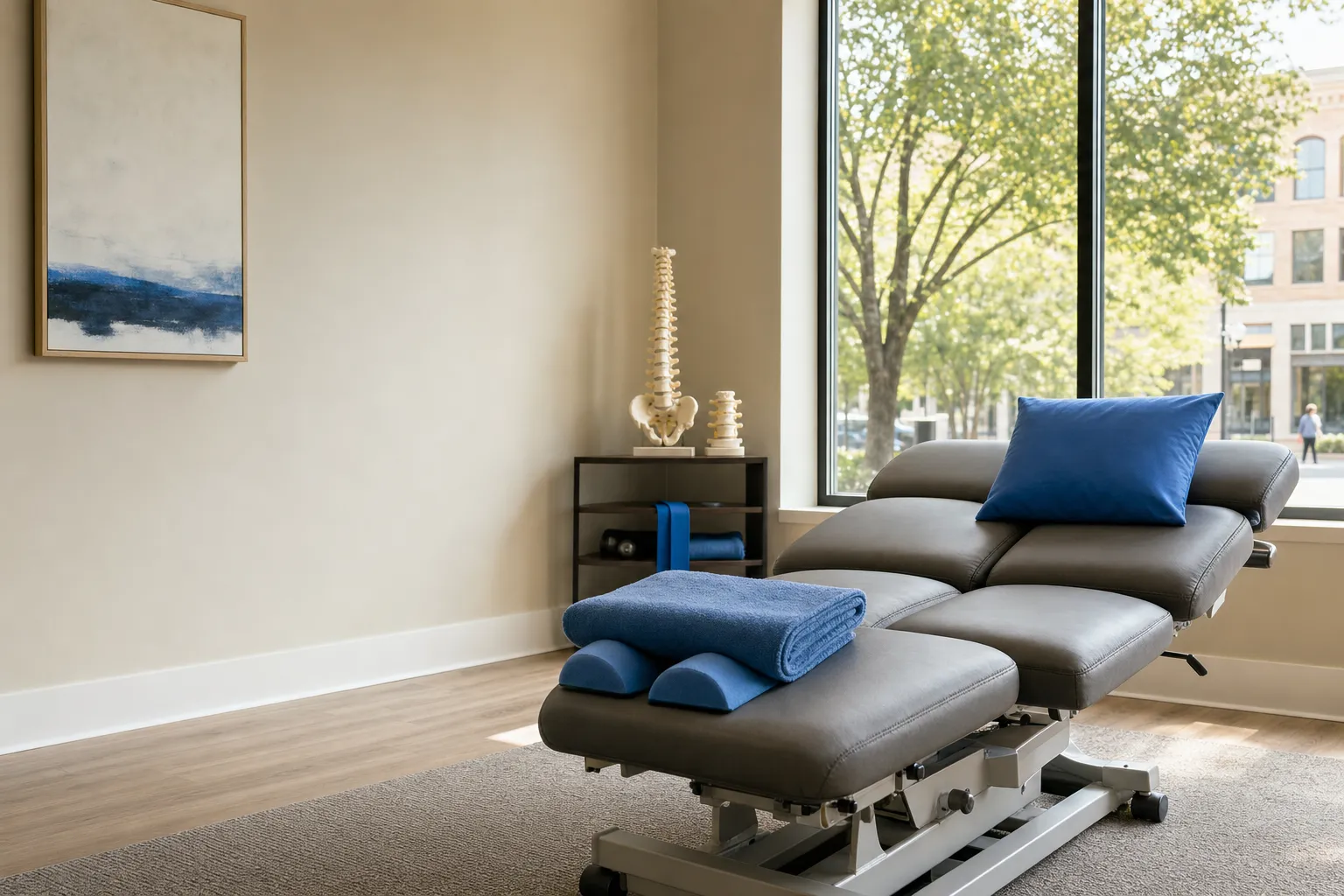
If your neck pain is new, getting worse, causing numbness, weakness, balance changes, or trouble swallowing, it needs a closer look rather than only home care. We assess those warning signs, guide immediate steps you can safely take, and decide when imaging or specialist referral is appropriate.
What we mean by neck posture and why it matters
When we talk about neck posture we mean the alignment and habitual position of the cervical spine and how the head sits over the shoulders during daily activities. Poor neck posture can create strain on muscles, joints, nerves, and discs. That strain often shows up as localized pain, headaches, stiffness, or symptoms that travel into the arm.
Neck posture matters because it influences how forces travel through the spine during sitting, driving, sports, and sleep. In Lake Geneva, patients who work long hours at a desk or who play weekend sports commonly develop posture related neck pain. Our role is to identify whether posture and movement are the main drivers, or whether symptoms point to something that needs a deeper medical evaluation.
when neck pain needs a closer look
If neck pain is rapidly worse, associated with neurological signs, follows trauma, or affects basic functions such as balance, swallowing, or bowel and bladder control, it needs prompt further evaluation. Mild, stable neck discomfort without neurological features is usually appropriate for conservative care that includes posture correction, targeted stretching, and safe spinal adjustment.
We use a combination of hands on assessment, movement tests, and a focused neurological exam to decide whether care here is right or whether imaging or referral is needed. Dr. Dan VanderWeit is a licensed chiropractor who leads those decisions at Freedom Chiropractic and Wellness.
Key concepts to understand
- Acute versus chronic. Acute neck pain comes on suddenly, often after injury. Chronic neck pain has lasted weeks to months and may involve posture or overuse.
- Radicular pain and neurological signs. Pain that follows the arm, numbness, tingling, or muscle weakness suggests nerve root involvement, which may require imaging or a specialist review.
- Red flags. Sudden severe pain after trauma, fever with neck stiffness, unexplained weight loss, or changes in bladder or bowel function are reasons for urgent medical assessment.
- Posture and movement role. Poor sitting posture, forward head carriage, and repetitive overhead work commonly contribute to persistent neck pain that responds to correction and retraining.
- Shared decision making. We explain risks, benefits, and alternatives so you understand why we recommend a course of care or additional testing.
Common warning signs that mean a closer evaluation is needed
Warning signs checklist
- New or worsening numbness, tingling, or weakness in an arm or hand.
- Loss of coordination, unsteady walking, or changes in balance.
- Severe pain after a fall, motor vehicle collision, or direct blow to the head or neck.
- Difficulty swallowing, hoarseness, or new breathing trouble with neck pain.
- Fever, unexplained weight loss, or history of cancer with new neck pain.
- Bladder or bowel control changes with neck symptoms.
Any of these signs prompt a more urgent conversation and often lead us to recommend imaging, medical clearance, or referral to a neurologist or spine specialist. For guidance on when to escalate care beyond chiropractic, see our related topic on When To See A Specialist.
How we evaluate neck pain in our clinic
We start with a focused history, including how the pain began, what makes it better or worse, and whether it follows a specific activity. Then we perform a physical exam that looks at posture, range of motion, joint play, and a basic neurological screen for strength, sensation, and reflexes.
If exam findings suggest nerve root compression, spinal instability, infection, or a non mechanical cause, we discuss appropriate imaging or medical referral. We do not use imaging routinely for simple neck pain, because imaging findings often do not match symptoms and can lead to unnecessary treatments.
- Assessment. History and physical exam focused on posture and neurologic signs.
- Conservative care trial. When appropriate, we begin measured conservative care that includes safe spinal adjustments, movement coaching, and targeted stretches.
- Reassessment. We track progress with measurable goals and modify the plan if symptoms fail to improve.
- Escalation. If red flags or neurological progression appear, we recommend imaging or specialist referral.
When posture focused care is appropriate and what it looks like
For many people with posture related neck pain, a structured program of movement retraining, spinal adjustments, soft tissue work, and lifestyle changes produces steady improvement. Our care plans are practical and measurable and include home guidance on workstation setup, sleep position, and progressive exercises.
We always explain realistic timelines. Some people notice meaningful improvement within a few visits. Others with chronic patterns or degenerative conditions need longer rehabilitation to change tissue tolerance and movement habits.
Learn about the specific techniques we use in our Chiropractic Adjustment service description.
Comparing simple posture related pain and concerning causes
| When home care and posture correction may be enough | When a closer look is needed |
|---|---|
| Mild ache after long sitting, no arm symptoms, gradual onset, improves with activity change | Sharp onset after trauma, progressive arm weakness, numbness in a specific nerve pattern |
| Stiffness that responds to mobility work and gentle adjustment | New balance problems, changes in bowel or bladder control, or signs of infection |
| Pain limited to neck muscles and upper traps, tied to posture | Pain accompanied by fever, unexplained weight loss, or history of cancer |
Related services and on site roles
We treat neck posture and neck pain here with targeted Neck Pain Treatment that blends spinal adjustments, movement coaching, and lifestyle guidance. Our sports chiropractic care supports athletes whose neck posture changes with training or impact.
If a presentation suggests a need beyond our scope, such as advanced neurological or surgical review, we help coordinate the next steps and communicate findings to other providers when appropriate.
How local factors in Lake Geneva influence neck posture care
Lake Geneva patients often balance office work with outdoor activities, boating, and recreational sports. Seasonal activities can change movement patterns and expose the neck to different loads. We consider those local habits when we plan care, rehab exercises, and prevention strategies.
Freedom Chiropractic and Wellness serves Lake Geneva and surrounding communities from our local clinic. For an overview of our services and locations, see our Services hub and our clinic page.
Helpful resources and evidence
Chiropractic is a regulated health profession. For background on the practice, see the general overview on Wikipedia. For state licensing and scope details, see the Wisconsin Department of Safety and Professional Services page for chiropractic practice.
Pro tip: Bring notes about how and when symptoms started and list any changes in strength or sensation. That information helps us determine whether a closer look is needed.
Common questions we hear
Below are brief answers to frequent concerns about neck posture and when to escalate care.
- Can poor posture permanently damage the neck? Habitual poor posture increases wear and may accelerate degenerative change, but early movement retraining and strengthening reduce long term risk and improve function.
- Do I always need imaging for neck pain? No. Imaging is reserved for red flags, progressive neurological signs, or when surgery is being considered. Routine imaging for simple mechanical neck pain is not always helpful.
- When should I worry about arm symptoms? Numbness, tingling, or weakness that follows an arm, or that is getting worse, typically requires further evaluation because it may indicate nerve root involvement.
When we refer or order imaging
We consider imaging when exam findings suggest structural compression, instability, fracture risk, or when symptoms fail to improve with a reasonable conservative trial. Imaging choices and timing depend on the clinical picture. If we refer you to imaging or another specialist, we explain the reason and expected next steps.
Key takeaway
If neck pain includes neurological symptoms, follows trauma, or affects basic functions like balance or swallowing, it needs prompt further evaluation. We combine posture assessment and movement based care for most mechanical neck problems, and we escalate to imaging or referral when clinical signs require it.
Frequently asked questions
How soon should I seek care for neck pain after a minor car crash?
If pain starts right away or you notice numbness, weakness, or worsening stiffness, seek evaluation promptly. Even after minor collisions, symptoms can evolve and early assessment helps prevent prolonged problems.
Are headaches related to neck posture a sign of something serious?
Headaches that come from neck posture are usually tension type and respond to movement correction. New severe headaches, or headaches with neurological signs, should be evaluated urgently.
Will improving my posture fix nerve related arm symptoms?
Posture improvement helps many people, but arm symptoms from nerve root compression sometimes need imaging and a tailored plan. We monitor progress closely and adjust the plan if nerve symptoms persist.
What should I bring to my first appointment?
Bring a brief history of how symptoms started, any imaging you already have, and a list of medications and prior treatments. Clear information speeds diagnosis and decision making.
Does chiropractic adjustment help with long term posture change?
Adjustments can relieve stiffness and restore joint motion. Lasting posture change depends on movement retraining, strengthening, and behavior changes that we include in our care plans.
Where to look next
Read patient experiences and get directions by checking our Google Business Profile. To explore more topics and services we offer, visit our topics and services pages listed below.