
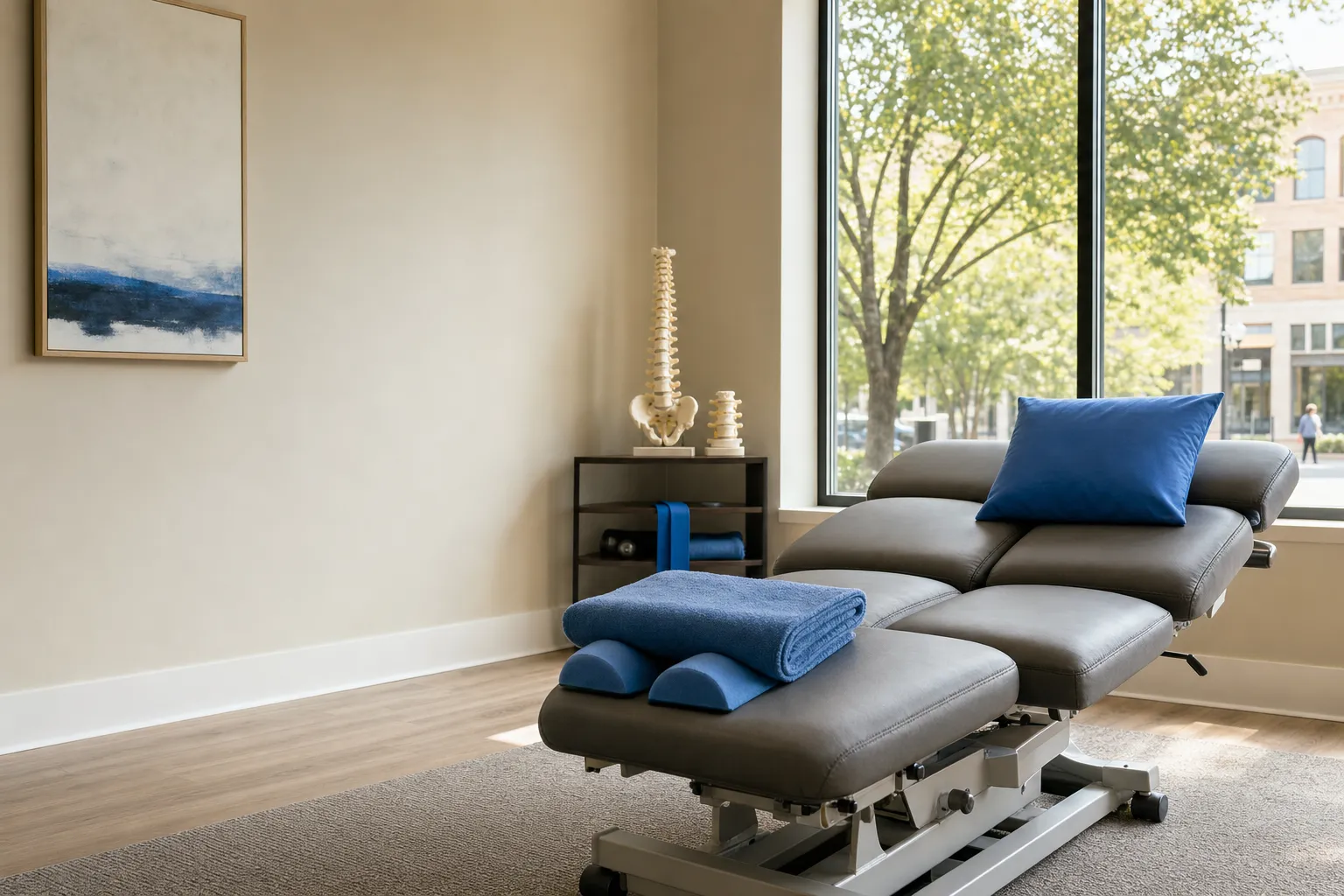
A neck pain treatment review is a focused visit where we confirm your history, evaluate how your neck moves and how nerves are functioning, check for red flags, and agree on a measurable treatment plan that includes in clinic care and a home program. At Freedom Chiropractic and Wellness in Lake Geneva, we use the review to decide whether chiropractic care, a targeted referral, or a combined approach is the best next step.
, then a quick summary
In short, the review is a short diagnostic visit that answers three questions: what is causing your neck pain, what level of care you need, and what specific steps will likely reduce your symptoms. You should leave the review with a clear diagnosis, realistic goals, and a first treatment or next step.
We structure the visit so you know the reasons behind our choices. That helps you weigh options, track progress, and decide how this care fits your life or athletic goals.
What we cover, step by step
- History and goals. We begin by asking how and when your neck pain started, whether headaches are present, whether symptoms go into the arms, and what activities make you better or worse. We also review prior imaging, diagnostics, medications, and any recent injuries.
- Symptom mapping and pain scale. You will describe where it hurts on a picture and rate typical pain on a 0 to 10 scale. We note patterns such as pain with sitting, after driving, or during athletic activity.
- Movement and range of motion tests. We observe how your neck and shoulders move. Restricted rotation or painful extension gives clues about which joints and muscles are involved.
- Neurological screen. We test reflexes, muscle strength, and sensation in the arms if there is numbness, tingling, or weakness. This helps rule in or out nerve irritation from the cervical spine.
- Orthopedic tests. Simple provocation tests help us narrow whether the source is joint, disc, muscle, or nerve related.
- Palpation and soft tissue assessment. We feel for muscle tightness, trigger points, and joint tenderness. That tells us which manual techniques are likely to help.
- Review of imaging and medical records. If you bring X rays, MRIs, or reports, we review them with you. That often changes the recommended approach and sets realistic expectations.
- Working diagnosis and plan. We explain our findings in plain language, outline likely causes such as mechanical neck strain, cervical facet irritation, or cervicogenic headache, and present the recommended next steps.
- Trial treatment and home plan. When appropriate, we may perform a gentle trial adjustment or soft tissue technique during the same visit. We also teach 1 to 3 immediate home strategies, such as a specific stretch, ergonomic cue, or movement correction.
How the review differs from a full initial exam
The review is focused and problem specific. It assumes you have already seen a provider or completed a basic exam within the last few months. A full initial exam is longer and may include a more detailed orthopedic and neurologic evaluation, baseline measurements, and a documented care plan spanning several visits. The review is meant to confirm the approach and set or adjust short term goals.
What a typical treatment plan looks like after the review
Treatment plans vary by diagnosis, activity level, age, and goals. A typical plan after a review includes three parts.
- In clinic care. Targeted spinal adjustments, joint mobilization, and soft tissue work to restore motion and reduce pain.
- Movement coaching. Specific corrective exercises and stretches that address posture, shoulder mechanics, and neck mobility.
- Lifestyle guidance. Ergonomic changes, sleep position tips, and nutrition or recovery suggestions that support healing and prevent recurrence.
For athletes we also add sport specific mobility and return to play criteria. For older adults we modify force and focus on safe joint play and balance.
Pro tip: Bring any recent imaging and a short symptom diary that shows what times of day your pain is worst. That makes the review much more accurate and efficient.
Common findings we see in Lake Geneva patients with neck pain and headaches
In our clinic we commonly find a mix of joint restriction, muscle tension across the upper trapezius and levator scapulae, and movement patterns driven by prolonged sitting or computer use. Athletes often present with neck stiffness tied to shoulder or thoracic mobility. Auto injury patients may have a combination of ligament irritation and muscle guarding that needs a staged plan.
When headaches relate to the neck, we call them cervicogenic headaches. These often improve when we restore motion in the upper cervical and thoracic spine and when we address trigger points in the shoulder girdle.
Red flags and when we refer out
Watch out: Certain signs need urgent medical attention or a specialist referral. These include sudden severe neck pain after trauma, progressive weakness, loss of bowel or bladder control, high fever with neck stiffness, or symptoms that suggest a stroke. If we see concerning signs, we arrange immediate referral and work with your medical provider to coordinate care.
We follow current professional guidance when deciding to refer for imaging, neurologic testing, or specialist care. The American Chiropractic Association provides clinical resources that guide these decisions
(see resource section below).
How long does the review take and what to expect afterward
A review visit usually lasts 20 to 35 minutes. That includes history, focused exam, a brief trial treatment if appropriate, and a clear discussion of the plan. After the review you will receive a measurable short term goal, such as reduced pain with rotation or fewer headache days in two weeks, and specific steps to reach that goal.
What good progress looks like
Good progress is specific and measurable. Examples include lowering your typical pain score by at least 2 points on a 0 to 10 scale over two weeks, regaining safe range of motion for work or sport, or a reduction in the number of headache days per week. Our care plans are designed around clear checkpoints so we can change course if a strategy is not working.
How we tailor care for different patients
We adapt the review and plan to your needs. For pregnant women we avoid certain positions and use gentler techniques. For seniors we consider bone health and modify force. For athletes we integrate return to play standards and sport specific mobility training. For people recovering from auto injury we stage care to reduce guarding before more forceful work.
What you should bring to a neck pain treatment review
Before you arrive
- Recent imaging or reports if you have them.
- A short list of current medications and previous treatments for this problem.
- A symptom diary if available, including triggers and activities that help or worsen symptoms.
Evidence and resources we follow
Neck pain is a common complaint and most causes respond to conservative care. For general patient information on neck pain, the Mayo Clinic offers an overview of causes and treatment options. For workforce and profession level data about chiropractors and licensure, we refer to the U.S. Bureau of Labor Statistics. For clinical guidance on red flags and referral decisions, we consult resources from the American Chiropractic Association.
These sources help inform how we evaluate and when we escalate care.
External resources:
How we work with other providers
When necessary we coordinate with primary care providers, physiotherapists, imaging centers, and specialists. Shared care allows us to combine hands on adjustments with diagnostic testing, targeted rehabilitation, or medical management when needed.
Practical tips to prepare for your review
- Wear comfortable clothing that allows you to move your neck and shoulders freely.
- Bring any recent X rays or MRIs on a disc or printed report.
- Note two to three activities that trigger your pain and two goals you want from care.
- If headaches are present, list frequency, typical triggers, and any medications you use.
Typical sensations during and after a trial adjustment
During a gentle trial adjustment you may feel a motion release, a sense of looseness, or brief soreness. Aftercare often includes mild muscle soreness for 24 to 48 hours as tissues recondition. We explain expected sensations ahead of time and give simple recovery steps.
How often follow up visits occur
Follow up frequency depends on severity and goals. Short term plans often include 2 to 4 visits over two weeks to assess response. Once symptoms improve, we extend visit intervals and emphasize home programs and self management. We document progress so adjustments to frequency are logical and measurable.
Key takeaway
The neck pain treatment review is a focused diagnostic visit. You will leave with a clear explanation, a measurable short term goal, and either an immediate care step or a recommended next step that may include in clinic treatment, home exercises, or a referral.
Frequently asked questions
Will you perform an adjustment during the review?
Often we perform a brief, gentle trial adjustment if it is safe and likely to help. The purpose is diagnostic as well as therapeutic, and we always explain the technique and alternatives before we begin.
Do I need imaging before a review?
Not always. Imaging is helpful when there is a history of trauma, persistent or progressive neurologic signs, or prior surgery. If you already have imaging, bring it so we can review it with you and adjust the plan accordingly.
How do you handle neck pain that includes headaches?
We assess whether the headache is cervicogenic, tension based, or from another source. When the neck is the driver, restoring upper cervical and thoracic motion, correcting posture, and addressing muscle trigger points often reduces headache frequency.
What if my symptoms get worse after an adjustment?
Mild temporary soreness can occur. If symptoms worsen substantially, we ask you to report that so we can reassess and modify the plan. In rare cases we refer for further testing or medical evaluation.
Can you treat athletes and weekend warriors with neck pain?
Yes. As a sports chiropractor service, we tailor the review and plan to athletic demands, integrate sport specific mobility work, and set return to play goals that are measurable and safe.
Learn more and check our local profile
Read patient reviews and get directions on our Google Business Profile to see how others in Lake Geneva describe their care. To learn more about how we approach neck pain, read our page on Neck Pain Treatment. If you are considering how to choose a clinician, see our guidance on Choosing A Chiropractor. For details about our location and the communities we serve, visit our Locations page.
Freedom Chiropractic and Wellness is led by Dr. Dan VanderWeit, a licensed chiropractor serving Lake Geneva and surrounding communities.