
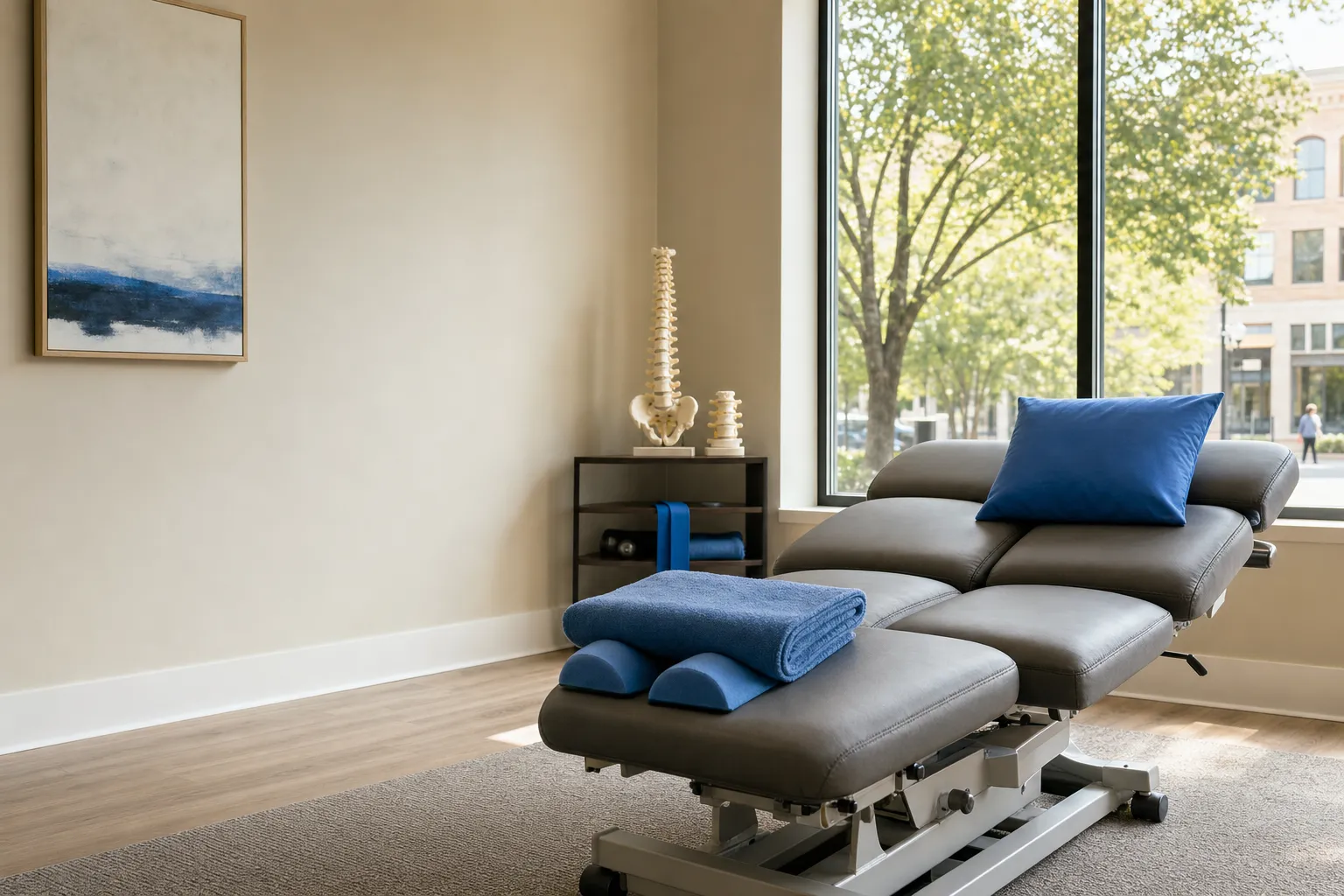
Family chiropractic is not a single treatment that fits everyone. In two sentences, here is the bottom line: family chiropractic is a set of tailored care plans for people of all ages, from children to seniors, focused on improving function and reducing pain, not a quick fix. At Freedom Chiropractic and Wellness in Lake Geneva, we build measurable plans around real progress instead of one size fits all visits.
Common misunderstandings we hear
Below are the misunderstandings patients often bring up, and what we tell them instead.
- Misunderstanding: Chiropractic is only for back pain.
Reality: We treat neck pain, extremity complaints, sports injuries, and movement limitations in addition to low back pain. Our services include chiropractic adjustment, targeted extremity techniques, and sports chiropractic care. - Misunderstanding: Family chiropractic means the same technique for every family member.
Reality: Children, pregnant women, athletes, seniors, and desk workers all need different approaches. Dr. Dan VanderWeit uses multiple spinal adjusting techniques and custom extremity adjustments to match each patient’s needs. - Misunderstanding: You must have imaging before any adjustment.
Reality: Imaging is useful in certain cases, like trauma or red flags. Often a focused history and movement exam guide safe, effective care without immediate imaging. - Misunderstanding: Chiropractic is risky for children and seniors.
Reality: Adjustments are adapted by force, technique, and positioning to be appropriate for age and condition. We emphasize safety and measurable goals for every patient. - Misunderstanding: Once adjusted, the problem is gone forever.
Reality: Sustained improvement usually requires a plan that includes movement coaching, corrective exercises, and lifestyle adjustments.
What family chiropractic actually looks like at our clinic
We combine hands on adjusting skills with movement coaching and nutritional guidance. That combination helps families regain function and sustain wellness.
How we approach a new family patient
- Initial conversation and history. We learn what matters to you, the history of the problem, and how symptoms limit daily life or activity.
- Movement and posture exam. We assess spine and joint motion, strength, and movement patterns to find what contributes to the issue.
- Testing and selective imaging when needed. Imaging is ordered only when indicated by the exam or history, or when conservative care has not progressed as expected.
- Personalized treatment plan. We propose measurable goals, a timeline for reassessment, and the mix of adjustments, extremity work, and supportive care we think will help.
- Supportive coaching. We include corrective exercises, stretching, and nutrition advice so results last beyond the clinic visit.
Pro tip: For children and teens, improve consistency and outcomes with simple at home movement habits and brief daily stretches rather than long exercise sessions. Small, regular changes are easier to maintain.
Safety, regulation, and what the evidence says
Chiropractic is a regulated health profession. The Wisconsin Department of Safety and Professional Services outlines licensure and practice rules for chiropractors in our state, which is the framework we follow for safe care. For a general background on the profession, the Encyclopedia entry on chiropractic summarizes the techniques and common uses.
Professional organizations provide practice guidance and continuing education. The American Chiropractic Association publishes resources about scope of practice and safety that inform how we train and maintain standards.
At Freedom Chiropractic and Wellness we are licensed and insured. Our team documents risk factors, modifies technique by age and condition, and explains likely outcomes before treatment.
Sources: Wisconsin DSPS chiropractor licensing information, Chiropractic overview on Wikipedia, American Chiropractic Association.
Who in a family benefits most from chiropractic care
Family chiropractic is appropriate for a broad set of people when care is tailored. Common audiences we work with include:
- Athletes and youth sports participants who need mobility, injury prevention, and return to play planning.
- Pregnant women seeking posture support, pelvic balance, and positional relief.
- Seniors managing chronic stiffness, balance concerns, or reduced mobility.
- Parents and desk workers with posture related neck and upper back pain.
- Auto injury patients needing coordinated recovery from whiplash and related problems.
We work with weekend warriors and active families, and we adapt plans for each person in the household.
How care is measured and when progress matters
We do not treat symptoms alone. Our plans set clear, measurable goals so we all know if care is working.
- Baseline function measures such as range of motion or pain with specific tasks.
- Short term objectives, for example improved sleep, less daily pain, or return to a sport activity.
- Reassessment points to check progress and change the plan if needed.
This approach separates ongoing maintenance from short term problem solving, and it guides decisions about frequency of visits and additional referrals when needed.
Watch out: If you have a history of cancer, unexplained weight loss, fever, progressive neurological loss, or recent major trauma, tell us immediately. Those situations require prompt evaluation and sometimes imaging before manual care.
Deciding if family chiropractic is right for you
Checklist to bring to your first visit
- Clear description of the main problem and how it limits daily life.
- List of current medications and recent medical history.
- Notes on activities that make symptoms better or worse.
- Any prior imaging or reports related to the problem.
Bringing this information speeds the process so we spend more time on targeted care than on paperwork.
Common questions families ask about treatment and aftercare
Patients want to know what adjustments feel like, how often to come in, and how to stay well at home. We explain sensations and recovery in plain language, and we pair adjustments with movement coaching that families can do at home without trying to replicate clinical techniques.
- After an adjustment you may feel immediate relief, mild soreness, or increased range of motion. These sensations are usually short lived.
- Frequency depends on goals, severity, and response to care. We review progress at planned reassessments and change the plan as needed.
- Home exercises focus on movement patterns and posture rather than on self adjusting. That keeps care safe and effective.
Key takeaway
Family chiropractic is personalized health care for all ages, focused on restoring function through targeted adjustments, extremity work, and movement coaching. Good care is measurable, age appropriate, and combined with education to prevent repeat problems.
Frequently asked questions
Is chiropractic safe for children and babies?
Yes, when performed by a licensed chiropractor who adapts technique and force to the child’s size and condition. We use gentler approaches for infants and children and explain why a given technique is chosen. If there are medical concerns we coordinate with your pediatrician.
Will my teenager need x rays before treatment?
Not always. We reserve imaging for cases with red flags, trauma, or when the exam suggests structural issues that affect safety. When imaging is needed we explain why and what we expect to learn from the images.
Can chiropractic help during pregnancy?
Many pregnant patients find posture and pelvic balance support helpful. We adapt positioning and technique for comfort and safety, and we work with you and your prenatal providers to align treatment with pregnancy care.
How long until I see results for chronic low back pain?
Timeline varies by cause, chronicity, and adherence to the plan. We set measurable short term goals, review progress at prescribed intervals, and revise the plan if improvement is not as expected.
What is sports chiropractic and how is it different?
Sports chiropractic emphasizes mobility, performance, and return to play. It blends spinal and extremity adjustments with movement assessment, sport specific coaching, and rehab focused on restoring function needed for the sport.
When should I see a medical specialist instead of chiropractic care?
Seek a specialist for suspected fractures, progressive neurological weakness, signs of infection, or serious systemic illness. We will refer or co manage when the situation requires medical or surgical evaluation.
Learn more and check our local profile
To see what neighbors say about their experience, check our Google Business Profile and read recent reviews. For more reading on family focused care and choosing a chiropractor, see our guides on choosing a chiropractor and on chiropractic benefits for families.